

Special Leave for Childbirth: What Are Fathers' Entitlements and What Applies in 2026?

When it comes to special leave for the birth of a child, there is a significant gap between what many fathers expect and what the law actually provides. In the UK, there is no standalone statutory entitlement to special leave around the birth — instead, rights are split across paternity leave, contractual policies, and collective agreements. How many days are available, and on what terms, depends on the interplay between the Employment Rights Act 1996, statutory paternity leave regulations, and your employment contract.
Special Leave for Childbirth: The Essentials at a Glance
- There is no general statutory "special leave" entitlement for fathers in the UK upon the birth of a child. Statutory Paternity Leave under the Paternity and Adoption Leave Regulations 2002 provides up to two weeks of leave.
- Many employers offer additional contractual leave — sometimes referred to as compassionate leave or special leave — around the birth, but this depends entirely on company policy.
- The EU Work-Life Balance Directive 2019/1158 requires at least ten working days of paternity leave across EU member states. The UK, no longer bound by EU law, retains its own two-week framework.
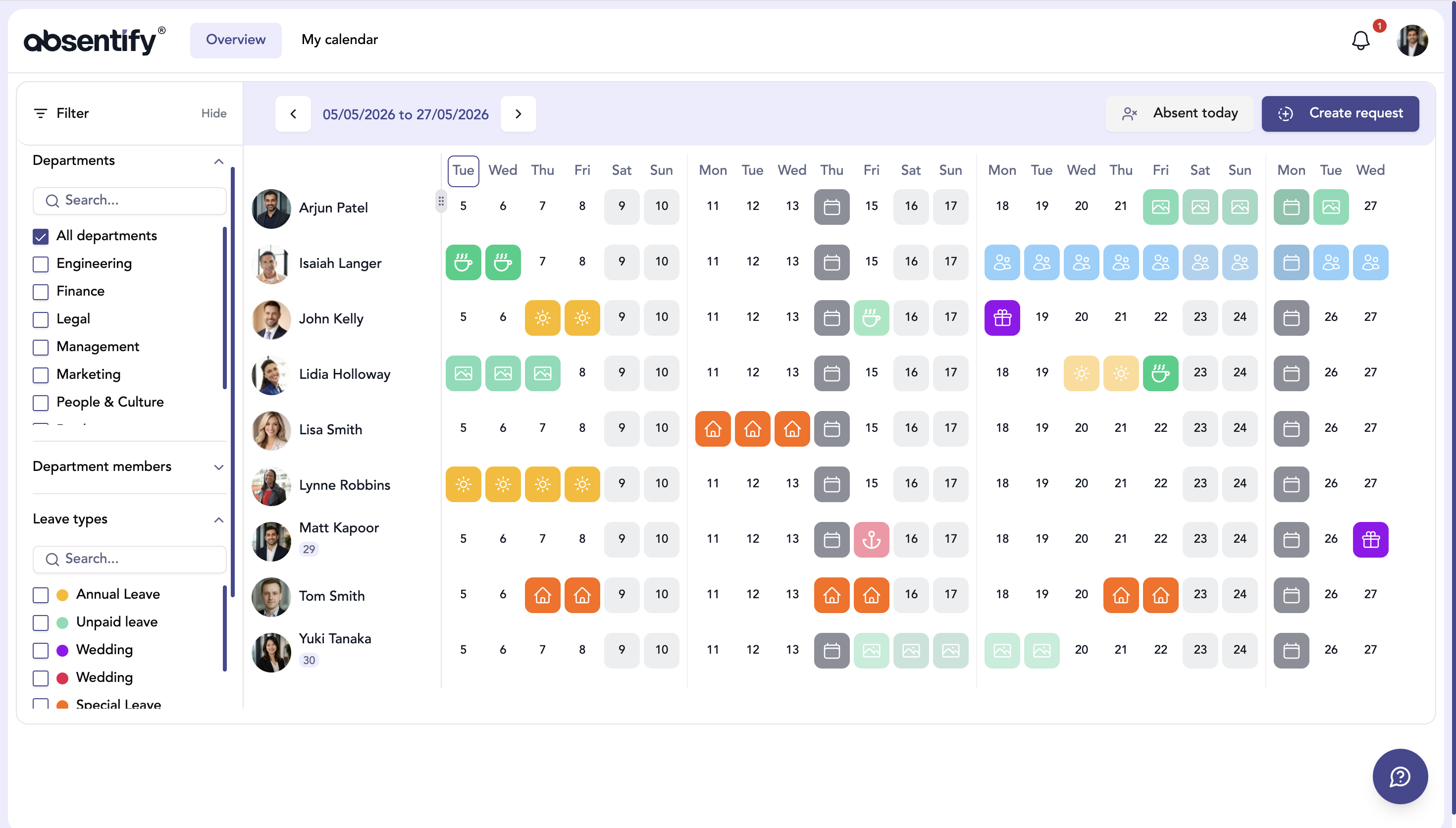
- absentify maps special leave for childbirth as a standalone absence category — separate from annual leave — with an approval workflow and document upload directly in Microsoft Teams and Outlook.
Is There a Statutory Right to Special Leave for Childbirth?
Special leave for childbirth refers to paid time off for the non-birthing parent immediately after the birth of a child. In the UK, this entitlement is primarily covered by Statutory Paternity Leave rather than a dedicated "special leave" category.
Eligible employees are entitled to one or two consecutive weeks of Statutory Paternity Leave, provided they have at least 26 weeks of continuous employment by the end of the 15th week before the expected week of childbirth. During this period, Statutory Paternity Pay (SPP) is paid at £184.03 per week or 90% of average weekly earnings, whichever is lower (2025/26 rate).
Beyond statutory paternity leave, there is no automatic right to additional special leave. Whether further paid days are available depends entirely on the employment contract, workplace policies, or collective agreements. Checking the contract before applying is therefore essential.
It is important to distinguish special leave for childbirth from Shared Parental Leave:
| Special Leave / Paternity Leave | Shared Parental Leave | |
|---|---|---|
| Duration | 1–2 weeks | Up to 50 weeks (shared with the mother) |
| Legal basis | Paternity and Adoption Leave Regulations 2002 | Shared Parental Leave Regulations 2014 |
| Timing | Within 56 days of the birth | Flexible, after the mother curtails maternity leave |
| Offset against each other | No | No |

How Much Special Leave Is a Father Entitled to at the Birth?
The answer depends on three factors: the statutory framework, collective agreements, and the precise wording of the employment contract.
Statutory Paternity Leave: the Legal Baseline
Under the Paternity and Adoption Leave Regulations 2002, eligible employees may take one or two consecutive weeks of leave. This leave must be taken within 56 days of the birth (or placement for adoption). Employees must give at least 15 weeks' notice before the expected week of childbirth.
| Legal basis | Eligible employees | Duration | Paid? |
|---|---|---|---|
| Statutory Paternity Leave | Employees with 26+ weeks of continuous service by the qualifying week | 1 or 2 weeks | Yes (SPP) |
| Contractual / enhanced paternity leave | Per company policy | Per company policy | Per company policy |
| Collective agreement | Per agreement terms | Per agreement terms | Per agreement terms |
| EU Directive 2019/1158 | Principle: at least 10 working days of paternity leave | 10 working days | Not directly applicable in the UK |
Special Leave for Childbirth Without a Collective Agreement
Where no collective agreement applies and the employment contract does not grant additional leave, the statutory two-week paternity leave is the baseline entitlement. Some employers offer enhanced paternity pay or additional compassionate leave days, but this is entirely voluntary.
Before applying, consider two questions:
- Does your employment contract include enhanced paternity provisions or additional special leave for family events?
- Is there a workplace policy or staff handbook that provides for extra leave around the birth?
If neither exists, statutory paternity leave is the only entitlement. Where enhanced provisions are available, ensure the application references the correct policy.
What Does the EU Require, and How Does the UK Compare?
The EU Work-Life Balance Directive 2019/1158 obliges all EU member states to provide at least ten working days of paid paternity leave. Since leaving the EU, the UK is no longer bound by this directive and retains its two-week statutory framework.
The EU Directive sets a baseline of at least ten working days of paternity leave. Whether individual EU member states go beyond this varies. For UK-based employers with operations across Europe, understanding both frameworks remains important for compliance across jurisdictions.
For HR teams, it remains essential to document leave entitlements based on the applicable statutory framework, contractual provisions, and internal policies. Organisations that offer enhanced paternity leave beyond the statutory minimum should record this in writing and apply it consistently. A formal company policy is the most effective way to ensure uniform treatment and reduce ad-hoc decisions.
Is There Special Leave for the Birth of a Grandchild?
Neither UK statute nor most standard employment contracts provide an explicit entitlement to special leave for the birth of a grandchild. A general right to time off cannot be derived from existing legislation. Whether an employer might grant time off on a discretionary basis depends on the individual circumstances and the terms of the employment contract. Without a specific legal or contractual basis, the birth of a grandchild should not be treated as a guaranteed leave entitlement.
For HR teams, a formal policy that covers family events beyond the immediate parent — such as the birth of a grandchild — provides greater legal certainty than ad-hoc decisions made under time pressure.
Can an Employer Refuse Special Leave for Childbirth?
Whether a refusal is lawful depends primarily on which legal basis applies and whether its conditions are met. An active vacation blackout period typically applies to annual leave under the Working Time Regulations and does not automatically override statutory or contractual leave entitlements.

A refusal is generally not permissible when:
- the employee qualifies for Statutory Paternity Leave and has given proper notice,
- the employment contract or a workplace policy provides an explicit entitlement,
- or a collective agreement expressly covers this occasion.
A refusal may be permissible when:
- the employee does not meet the eligibility criteria for Statutory Paternity Leave,
- no contractual or collective agreement provision exists for this occasion,
- or a required supporting document is permanently missing.
If an employer refuses leave despite a valid legal or contractual basis, request the decision in writing and cite the applicable provision. Where a recognised trade union or employee representative body exists, they can be involved in the process.

Map special leave entitlements compliantly — directly in Microsoft 365
absentify structures approval workflows and absence categories separately from annual leave, directly in Teams and Outlook.
How Do I Apply for Special Leave for Childbirth Correctly?
Childbirth differs from other special leave occasions in that it is broadly predictable, but the exact date is not. This affects the process at two specific points:
- Announce the evidence — don't wait for it: The birth certificate is usually only available a few days after the birth. Submit the application immediately and announce the supporting document in writing at the same time.
- Clarify the category from the start: Special leave for childbirth must not be recorded as annual leave if a separate leave entitlement exists. Request written confirmation of the absence category in the application itself. A written record of the leave type ensures audit-readiness.
For a complete application checklist — from the legal basis to cover arrangements — see the leave request template. The general checklist for applying for special leave applies equally to all occasions.
Documenting and Managing Special Leave for Childbirth Compliantly
Whether an entitlement to special leave for childbirth exists depends on the applicable statutory framework, the wording of the employment contract, and whether any collective agreement provisions apply. A single statutory standard across all employers does not exist.
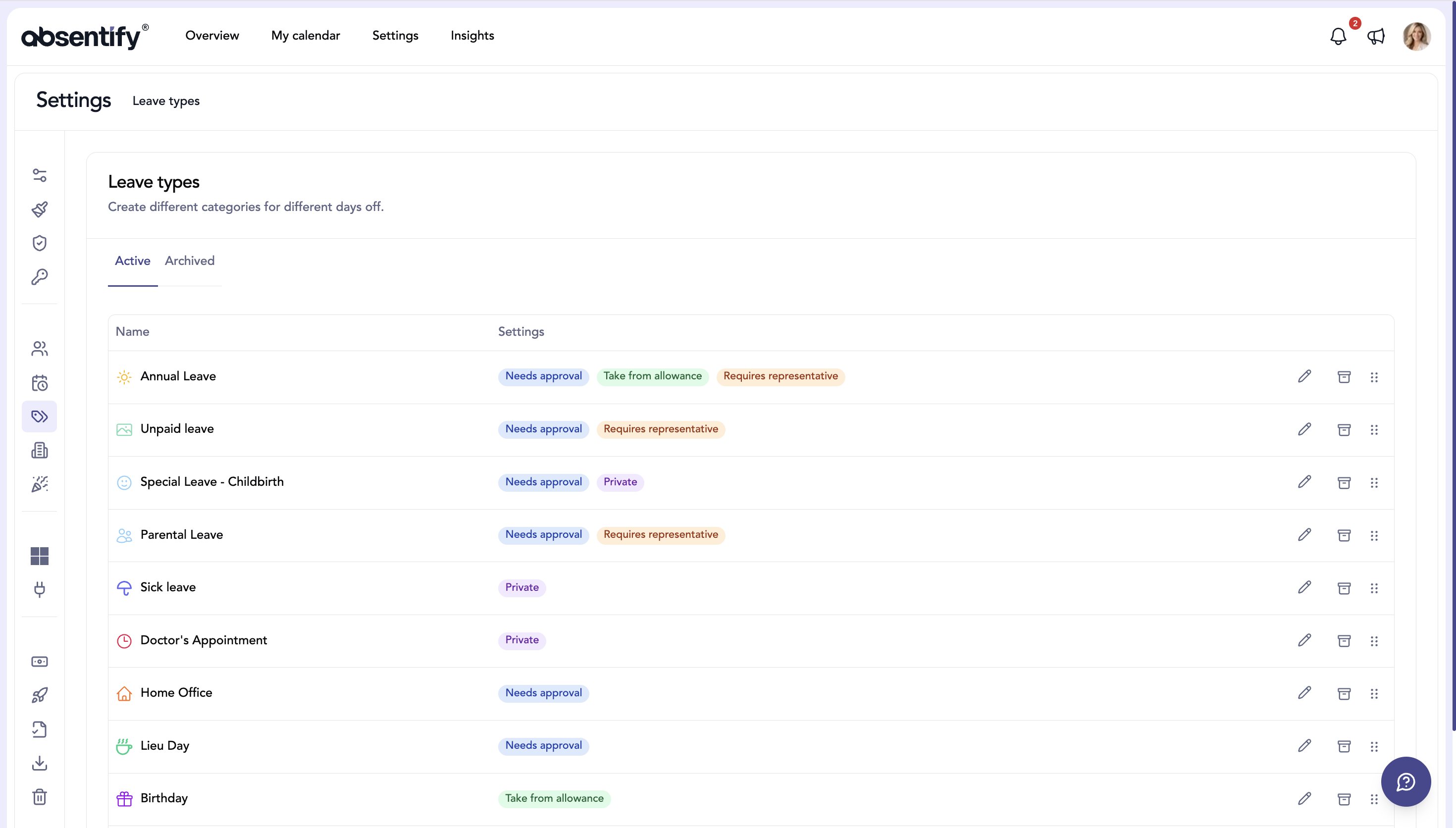
HR teams sometimes incorrectly book these days as annual leave. This can lead to payroll errors and compliance risks. In absentify, special leave for childbirth can be set up as a standalone absence category. This enables the process to be standardised across the organisation.
Your benefits with absentify:
- Set up special leave for childbirth as a standalone absence category, technically separate from the annual leave allowance
- Embed the approval workflow and document upload directly in the request, centrally accessible for HR
- Automatic notifications to relevant parties, reducing email chains and follow-up queries
- Direct integration with Microsoft Teams and Outlook — where your team already works
Would you like to simplify your special leave management?
- No credit card required
- Unlimited free access
- Upgrade or cancel anytime
Special Leave for Childbirth – Frequently Asked Questions
About the author

Anna Keller
Content manager at absentify
As a blog author at absentify, Anna Keller explains how companies can efficiently manage absences, vacations, and working hours. In her articles, she combines HR practice with Microsoft 365 tips for Outlook and Teams and provides templates, step-by-step instructions, and software comparisons for modern, digital processes.
Share article
More interesting articles

Reducing overtime: rights, duties and the process for employers and teams
Reducing overtime means offsetting accumulated extra hours with time off or payment. Under German employment law, the six calendar months or 24 weeks specified in the German Working Time Act apply solely to offsetting an extended working day against the statutory eight-hour average. Employment contracts, works agreements or collective agreements determine how an overtime balance can be reduced. Where these rules permit time off in lieu, the employer determines its timing and process within the scope of their right to give instructions.
Anna Keller
Content manager at absentify
When does unused leave expire? Deadlines and exceptions that determine your entitlement
Under German law, unused leave expires only under certain conditions: entitlement generally lapses on 31 December, or after the carryover period on 31 March, only if your employer has given you timely and specific notice of the impending expiry and you still do not take the leave. An exception applies in cases of continuous illness.
Anna Keller
Content manager at absentify

Employee Self Service (ESS): Definition, Features, and Benefits for Leave and Absence Management
Employee Self Service (ESS) gives employees access to manage their personal data, leave requests, or absences themselves without coordinating every step with HR. The term originally comes from SAP HR modules and has become an umbrella term for self-service features in human resources. Its benefits are particularly clear in leave and absence management.
Anna Keller
Content manager at absentify