

Gel des congés : définition, conditions et limites légales
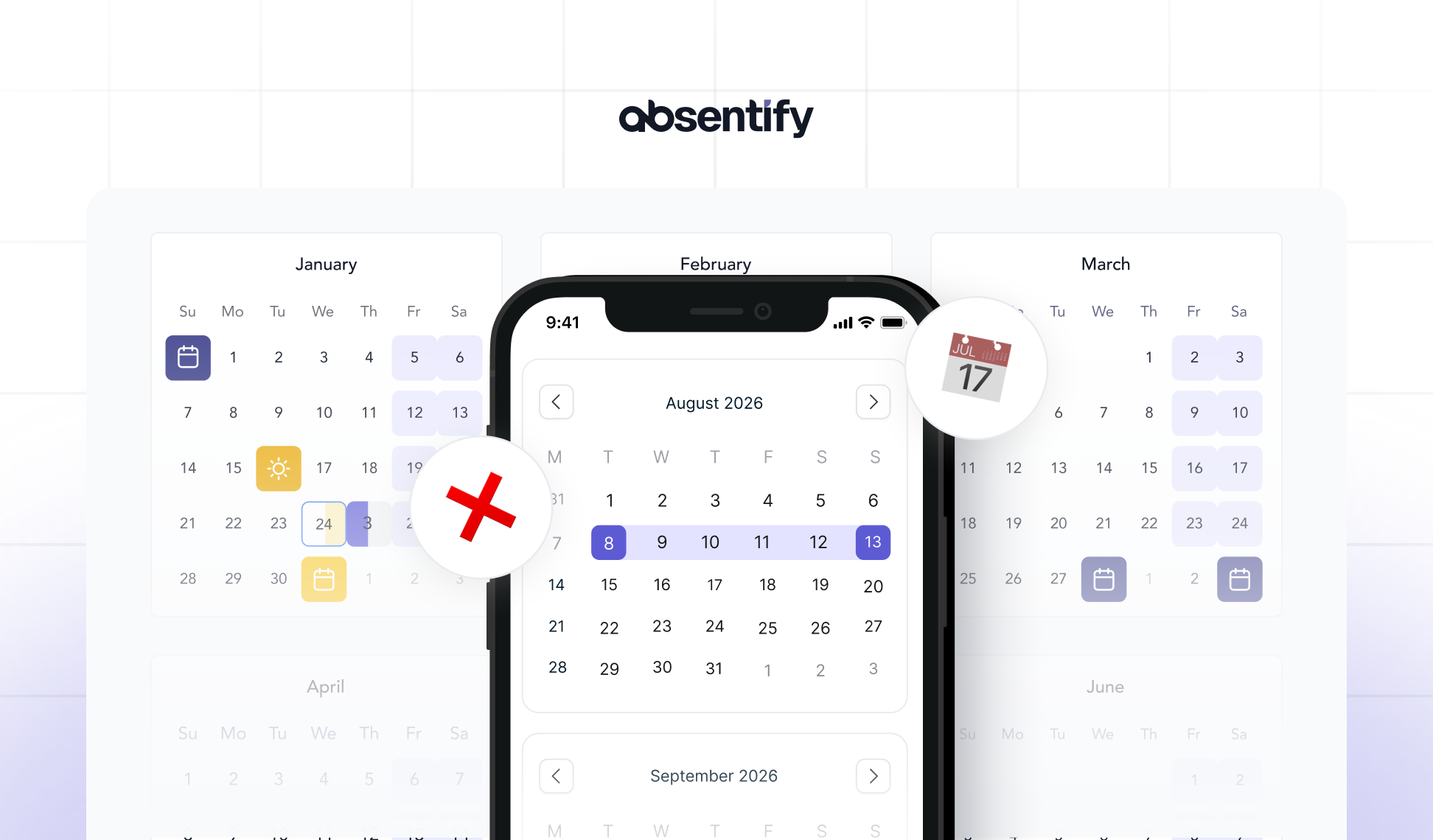
Un gel des congés désigne une période définie par l'employeur durant laquelle les salariés ne sont pas autorisés à prendre de congés. Cette mesure vise à garantir la continuité de l'activité dans des situations exceptionnelles et impacte directement la planification des absences des collaborateurs. C'est pourquoi des règles strictes encadrent sa mise en œuvre en matière de légalité, de durée, de consultation des représentants du personnel et d'application pratique.
Gel des congés : l'essentiel en un coup d'œil
- Un gel des congés n'est recevable que lorsqu'un motif opérationnel concret existe, que la période est clairement délimitée et que la mesure est objectivement justifiée.
- Des congés déjà validés ne peuvent être annulés que dans des circonstances absolument exceptionnelles, par exemple en cas de menace existentielle pour l'entreprise.
- Une communication transparente, une documentation rigoureuse et une information uniforme sont déterminantes pour la sécurité juridique de la mesure.
- Un logiciel de gestion des congés facilite considérablement la planification, la traçabilité et la coordination des périodes de gel, en particulier dans les équipes nombreuses.
Qu'est-ce qu'un gel des congés ?
Un gel des congés est une directive de l'employeur interdisant aux salariés de prendre des congés durant une période déterminée. Le droit aux congés payés n'est pas remis en cause : seul le moment de la prise de congé est restreint. Un gel des congés est toujours temporaire et nécessite un motif opérationnel concret.
En droit du travail français, la prise des congés est encadrée par les articles L3141-12 à L3141-23 du Code du travail. L'employeur fixe la période de prise des congés et l'ordre des départs, en tenant compte des critères légaux (situation familiale, ancienneté, activité chez d'autres employeurs). Toutefois, il ne peut restreindre la prise de congés que pour des raisons objectives liées aux nécessités de service. Sans motif légitime ou sans délimitation claire dans le temps, la restriction est susceptible d'être contestée devant le conseil de prud'hommes.

Quand un gel des congés est-il autorisé ?
Un gel des congés n'est admissible que lorsqu'il repose sur un motif opérationnel précis, qu'il est limité dans le temps et que les droits des salariés sont respectés. L'enjeu est toujours de trouver un équilibre entre le droit aux congés des collaborateurs et les impératifs de fonctionnement de l'entreprise. Une restriction générale ou préventive n'est pas acceptable.
Quel est le cadre juridique du gel des congés ?
En France, le Code du travail confère à l'employeur le pouvoir de fixer la période de prise des congés et l'ordre des départs (article L3141-16). En l'absence d'accord collectif, l'employeur définit ces modalités après avis du comité social et économique (CSE). Il doit informer les salariés au moins deux mois avant l'ouverture de la période de congés.
Cependant, l'employeur ne peut pas interdire purement et simplement la prise de congés sans motif légitime. Le droit aux congés payés est un droit fondamental du salarié, garanti par la directive européenne 2003/88/CE qui prévoit un minimum de quatre semaines de congés annuels payés. Toute restriction doit être justifiée par des nécessités opérationnelles réelles et documentées.
Quelles sont les conditions d'un gel des congés ?
Un gel des congés n'est justifiable que lorsqu'un besoin opérationnel concret existe, que la période est clairement définie et que la mesure est proportionnée. Si l'une de ces conditions fait défaut, la restriction peut être jugée abusive.
1. Motif opérationnel concret
L'employeur doit identifier un besoin précis affectant directement le fonctionnement de l'entreprise. Une charge de travail habituelle ou un sous-effectif structurel ne constituent pas des motifs suffisants.
2. Période clairement définie
Les dates de début et de fin du gel doivent être sans ambiguïté. La durée doit correspondre strictement à la durée réelle du besoin opérationnel.
3. Application proportionnée
Le gel ne doit concerner que les postes ou services dont la présence est strictement indispensable. Un gel généralisé à l'ensemble de l'entreprise n'est justifié que dans des cas exceptionnels.
Quand existe-t-il un motif légitime pour un gel des congés ?
Un motif légitime existe lorsque l'employeur ne peut assurer la continuité de l'activité sans restreindre temporairement la prise de congés. La situation doit être exceptionnelle et ne pas pouvoir être gérée par la planification habituelle des effectifs.
Les motifs légitimes courants comprennent notamment :
- le respect d'échéances impératives et non reportables
- un besoin soudain de renfort en personnel
- un volume de commandes ou de travail exceptionnellement élevé
- une menace financière aiguë pour l'entreprise
- un taux d'absentéisme maladie anormalement élevé
- des situations de crise exceptionnelles
- un nombre trop élevé de demandes de congés simultanées
Respect d'échéances impératives et non reportables
Un gel des congés peut être justifié lorsque des échéances fixes doivent être respectées et ne peuvent être reportées. Il s'agit par exemple de clôtures comptables, d'audits, de contrôles réglementaires ou de dates de livraison contractuelles. La présence de certains collaborateurs doit être indispensable au respect de ces échéances.
Besoin soudain de renfort en personnel
Une augmentation brutale des besoins en personnel peut justifier un gel des congés si elle survient de manière imprévue et n'était pas anticipable. L'élément déterminant est que ce besoin supplémentaire ne peut être couvert par une redistribution des tâches ou des dispositifs de remplacement.
Volume de commandes exceptionnellement élevé
Lorsqu'un nombre inhabituellement élevé de commandes ou de projets arrive dans un laps de temps réduit et que leur traitement dans les délais est critique pour l'entreprise, un gel des congés peut être justifié. Ce pic d'activité doit clairement s'écarter du rythme normal et rester limité dans le temps.
Menace financière aiguë pour l'entreprise
Un gel des congés peut être justifié lorsqu'il contribue à prévenir une crise financière imminente. La condition est que, sans la capacité de travail supplémentaire, l'entreprise subirait un préjudice considérable et que des mesures moins restrictives ne suffiraient pas.
Taux d'absentéisme maladie anormalement élevé
Lorsque plusieurs collaborateurs sont simultanément absents pour maladie et que le fonctionnement de l'entreprise est menacé, un gel temporaire des congés peut être justifié. L'élément déterminant est que les absences sont survenues de manière inattendue et ne peuvent être compensées à court terme.
Situations de crise exceptionnelles
Dans des circonstances de crise particulières, telles que des perturbations graves de l'activité ou des événements extérieurs ayant un impact direct sur l'entreprise, un gel des congés peut s'avérer nécessaire. Il doit se limiter aux services concernés et rester cantonné à la durée de la crise.
Nombre trop élevé de demandes de congés simultanées
La seule accumulation de demandes de congés ne justifie pas un gel généralisé. Toutefois, si l'effectif ne permet pas d'assurer un service minimum, certaines demandes individuelles peuvent être refusées. Un gel général ne doit pas se substituer à l'examen au cas par cas qui s'impose.

Commencer gratuitement
Aucune carte bancaire requise – accès illimité avec le plan gratuit. Passez à un plan supérieur ou annulez à tout moment.
Quels motifs ne justifient pas un gel des congés ?
Les circonstances courantes ou résultant d'un défaut de planification des effectifs ne sont pas des motifs suffisants. Une pression économique générale sans menace concrète pour le fonctionnement de l'entreprise ne suffit pas non plus. Un gel des congés ne doit pas servir à compenser des problèmes structurels de l'organisation.
Pourquoi la période d'un gel des congés doit-elle être limitée ?
Un gel des congés n'est légitime que lorsque ses dates de début et de fin sont clairement établies. Des restrictions ouvertes ou permanentes sont inacceptables. La période doit correspondre au besoin opérationnel concret et ne pas excéder ce qui est nécessaire.
Quand les représentants du personnel doivent-ils être consultés ?
En France, le comité social et économique (CSE) doit être consulté dès lors que le gel des congés concerne plusieurs salariés ou affecte les modalités générales de prise de congés. Un gel imposé sans consultation du CSE est juridiquement contestable et peut être déclaré inopposable aux salariés. Dans les entreprises dépourvues de CSE, l'employeur doit néanmoins respecter les obligations d'information individuelle.
Quelle peut être la durée d'un gel des congés ?
Un gel des congés ne peut rester en vigueur que le temps pendant lequel le besoin opérationnel concret persiste. Il n'existe pas de durée maximale fixe prévue par la loi. Ce qui importe, c'est le lien étroit avec le besoin réel et une délimitation temporelle claire dès le départ.
Quelles limites temporelles s'appliquent à un gel des congés ?
La période doit être établie à l'avance et découler directement du motif opérationnel. Un gel à durée indéterminée ou sans échéance n'est pas recevable. Si le besoin opérationnel prend fin plus tôt que prévu, le gel doit cesser en conséquence.
Quand la durée d'un gel des congés est-elle disproportionnée ?
Un gel des congés est considéré comme disproportionné lorsqu'il s'étend nettement au-delà de ce que le motif opérationnel justifie, ou lorsqu'il bloque des périodes prolongées — plusieurs mois par exemple — sans justification précise. Des gels récurrents à la même période chaque année ne sont défendables que si le motif est documenté à nouveau à chaque fois.
Que se passe-t-il pour des congés déjà validés durant un gel ?
Des congés déjà validés restent en principe acquis, même si un gel est annoncé ultérieurement. Leur annulation n'est possible que dans des cas rares et exceptionnels.
L'employeur ne peut revenir sur des congés validés que lorsqu'une situation opérationnelle extraordinaire se présente et que des dommages considérables en résulteraient autrement. Les frais engagés par le salarié, tels que des frais d'annulation de voyage, doivent être pris en charge par l'employeur.
Comment un gel des congés doit-il être annoncé ?
Un gel des congés n'est juridiquement opposable que s'il est annoncé avant le début de la période restreinte et que les dates sont clairement communiquées. Une imposition rétroactive n'est pas recevable.
Quel est le délai d'annonce d'un gel des congés ?
En France, l'employeur doit communiquer la période de prise des congés au moins deux mois avant son ouverture (article L3141-16 du Code du travail). Un gel de congés devrait donc être annoncé dans un délai comparable. Plus la période restreinte est proche, plus les exigences de justification sont élevées.
Comment un gel des congés doit-il être communiqué ?
L'annonce doit préciser la période exacte et le motif opérationnel concret. Tous les collaborateurs concernés doivent être informés simultanément. Une communication écrite est indispensable pour documenter clairement le moment de l'annonce et son contenu.
Un gel des congés s'applique-t-il durant la période d'essai ?
Un gel des congés peut également être imposé pendant la période d'essai d'un salarié. Aucune règle spécifique ne s'applique. Les mêmes conditions que pour tous les autres salariés sont requises.
Même pendant la période d'essai, un gel des congés ne peut être imposé que lorsqu'un motif opérationnel légitime existe et que la période est clairement définie. La possibilité de rupture simplifiée pendant l'essai ne modifie en rien le droit aux congés payés ni les conditions requises pour un gel.
Un gel des congés est-il recevable pendant une période de chômage partiel ?
Pendant une période de chômage partiel (activité partielle), les exigences sont particulièrement strictes en matière de gel des congés. Le chômage partiel signifie que l'activité de l'entreprise est temporairement réduite. Imposer simultanément un gel des congés entre en contradiction avec cette logique.
Un gel des congés pendant une période de chômage partiel ne se justifie que si, malgré la réduction d'activité, un besoin concret et limité dans le temps nécessite impérativement la présence de certains collaborateurs. L'employeur doit clairement démontrer ce besoin. Des gels généralisés pendant le chômage partiel sont irrecevables.
Un gel des congés est-il justifié en raison de la maladie de collaborateurs ?
La maladie d'un salarié ne justifie pas en soi un gel des congés. Les collaborateurs en arrêt maladie ne prennent pas de congés : ils sont en incapacité de travail. Un gel des congés ne doit pas être imposé dans le but de compenser des absences liées à la maladie.
La situation est différente lorsqu'un nombre exceptionnellement élevé d'arrêts maladie menace le fonctionnement de l'entreprise. Dans ce cas, un gel temporaire pour les collaborateurs en poste peut être justifié, à condition qu'un motif opérationnel légitime soit clairement établi.
Un gel des congés peut-il être imposé pour les fêtes de fin d'année ?
Un gel des congés pendant les fêtes de fin d'année (Noël, Nouvel An) n'est admissible que sous des conditions strictes. La période en elle-même ne justifie pas une restriction. Ce qui compte, c'est l'existence d'un besoin opérationnel concret nécessitant une présence continue.
Un surcroît d'activité récurrent en fin d'année ou des pics saisonniers connus ne suffisent pas à eux seuls. L'employeur doit démontrer pourquoi l'activité ne pourrait être maintenue sans le gel et pourquoi d'autres mesures de planification ne suffisent pas. De plus, la période doit être clairement définie et communiquée suffisamment en amont.
Conclusion : mettre en place un gel des congés en toute sécurité juridique
Un gel des congés n'est recevable que sous des conditions strictes. Il nécessite un motif concret, une période clairement délimitée et une coordination interne rigoureuse. Plus la planification, les demandes et les décisions sont documentées de manière transparente, plus le risque de conflits et de contentieux est réduit.
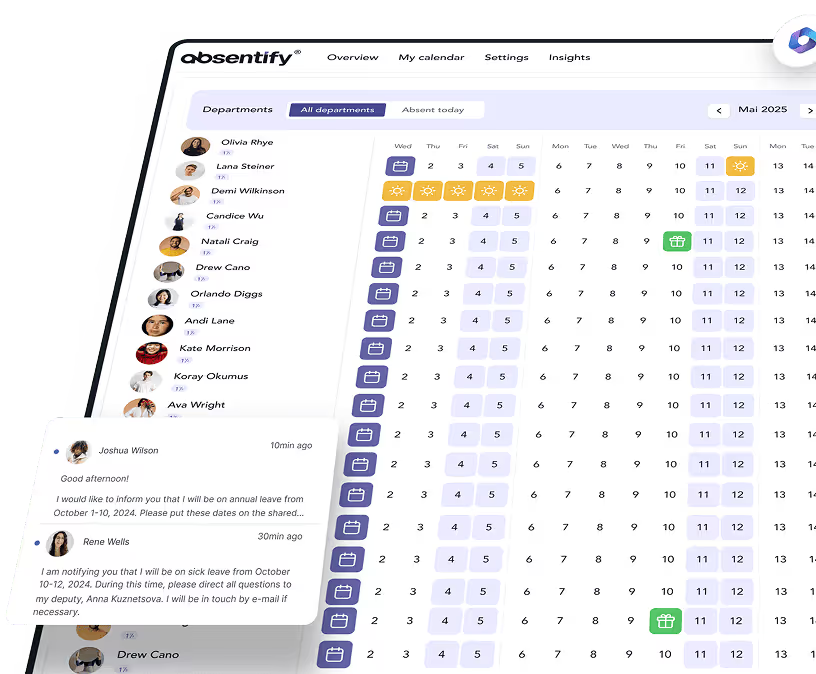
Un logiciel de gestion des congés accompagne précisément ce processus. Avec absentify, vous travaillez directement dans Microsoft Teams et gardez une vue centralisée sur les périodes de gel, les demandes de congés et les absences.
Vos avantages avec absentify :
- Demandes de congés et périodes de gel au même endroit
- Vue d'ensemble claire pour les RH et les managers
- Décisions traçables sans effort supplémentaire
- Moins de questions et de coordination nécessaires
Vous souhaitez simplifier votre gestion des congés ?
- Aucune carte bancaire requise
- Accès gratuit illimité
- Passez à un plan supérieur ou annulez à tout moment
Gel des congés – Questions et réponses fréquentes
À propos de l'auteur

Anna Keller
Responsable de contenu chez absentify
En tant qu'auteure du blog absentify, Anna Keller explique comment les entreprises peuvent gérer efficacement les absences, les congés et le temps de travail. Dans ses articles, elle allie pratique RH et astuces Microsoft 365 pour Outlook et Teams, et propose des modèles, des guides pas à pas et des comparatifs de logiciels pour des processus modernes et digitaux.
Partager l'article
Plus d'articles intéressants
Réduction des heures supplémentaires : droits, obligations et procédure pour les employeurs et les équipes
La réduction des heures supplémentaires consiste à compenser les heures accumulées par du repos ou une rémunération. En droit du travail allemand, les six mois civils ou 24 semaines prévus par la loi allemande sur le temps de travail concernent uniquement la compensation d'une journée de travail prolongée afin de revenir à la moyenne légale de huit heures. Le contrat de travail, l'accord d'entreprise ou la convention collective détermine comment un solde d'heures supplémentaires peut être réduit. Lorsque ces règles autorisent un repos compensateur, l'employeur en fixe le moment et les modalités dans le cadre de son pouvoir de direction.
Anna Keller
Responsable de contenu chez absentify
Expiration des congés non pris : les délais et exceptions qui déterminent vos droits
En droit allemand, les congés non pris n'expirent que sous certaines conditions : les droits s'éteignent en principe le 31 décembre, ou après la période de report le 31 mars, uniquement si l'employeur a informé le salarié suffisamment tôt et de manière précise de l'expiration imminente et que celui-ci ne prend malgré tout pas ses congés. Une exception s'applique en cas de maladie continue.
Anna Keller
Responsable de contenu chez absentify

Employee Self Service (ESS) : définition, fonctions et avantages pour les congés et les absences
L’Employee Self Service (ESS) désigne l’accès qui permet aux collaborateurs de gérer eux-mêmes leurs données personnelles, leurs demandes de congés ou leurs absences, sans devoir coordonner chaque étape avec le service RH. Le terme est issu à l’origine des modules SAP HR et s’est imposé comme appellation générique des fonctions en libre-service dans la gestion des ressources humaines. Son intérêt apparaît tout particulièrement dans la gestion des congés et des absences.
Anna Keller
Responsable de contenu chez absentify