

Employee Self Service (ESS): Definition, Features, and Benefits for Leave and Absence Management
Employee Self Service (ESS) gives employees access to manage their personal data, leave requests, or absences themselves without coordinating every step with HR. The term originally comes from SAP HR modules and has become an umbrella term for self-service features in human resources. Its benefits are particularly clear in leave and absence management.
Employee Self Service: Key Takeaways
- Employee Self Service (ESS) lets employees manage personal data, payslips, benefits, leave, and absences themselves instead of submitting every change through HR.
- The difference between ESS and Manager Self Service (MSS) is the role: ESS is for employees, while MSS is for managers who approve requests and view team data.
- When choosing employee self-service software, the main considerations are integration capabilities, data protection with EU hosting, usability, and the actual range of features.
- absentify provides Employee Self Service for leave and absences directly in Microsoft Teams and Outlook, so companies do not need to introduce separate leave management software.

What Is Employee Self Service (ESS)?
Employee Self Service (ESS) is a feature within HR software that allows employees to independently manage selected personal data and requests. The idea is similar to online banking or self-checkout at a supermarket: instead of involving a third person, everyone completes their own part, always within clearly defined access rights.
Depending on the provider, access is available through a dedicated employee self-service portal, an app, or a module within a larger HR software platform. The abbreviation ESS has become established and is used interchangeably with the full term “Employee Self-Service.”
Which Tasks Does Employee Self Service Typically Cover?
An employee self-service portal brings together features for pay and compensation, personal data, benefits, absences, and leave.
| Area | Typical task | Benefit for employees |
|---|---|---|
| Pay & compensation | Accessing payslips and tax documents | Independent of HR office hours |
| Personal data | Changing an address, bank details, or emergency contact | No forms and no waiting time |
| Benefits | Selecting and managing additional benefits | Overview of personal entitlements |
| Absences & leave | Submitting requests, viewing remaining leave, and entering a substitute | Immediate feedback instead of email exchanges |
Employees use absence and leave features more frequently than most other areas. Without a dedicated system, it is also the area that creates the most work for HR because requests, remaining leave, and substitutes otherwise have to be managed through emails and spreadsheets.
What Is the Difference Between ESS, Manager Self Service, and an HRIS?
Employee Self Service, Manager Self Service, and HRIS can be clearly distinguished: ESS and MSS are features, while an HRIS is often the system in which those features operate.
How Does ESS Differ From Manager Self Service (MSS)?
Employee Self Service is intended for employees, while Manager Self Service (MSS) is intended for managers. With MSS, managers approve leave requests, view team calendars, or initiate performance reviews. In practice, a leave request usually moves through ESS first (submitting the request) and then MSS (approving the request).
Is Employee Self Service Part of an HRIS?
An HRIS (Human Resources Information System) manages employee data across the company and provides Employee Self Service as one of several modules, alongside recruiting, payroll, or reference letter creation.
However, not every ESS requires a complete HRIS. absentify, for example, provides selected ESS features for leave and absences without requiring companies to introduce a complete human resources information system.
What Benefits Does Employee Self Service Offer Employees and HR?
Employee Self Service offers different, complementary benefits for employees and HR.
Benefits of Employee Self Service for Employees
- Access independent of HR office hours
- An immediate overview of remaining leave, payslips, and absence status
- Fewer questions and less waiting for simple changes
Benefits of Employee Self Service for HR and Managers
- Less manual data entry and fewer routine questions
- A better overview of team absences, which reduces scheduling conflicts
- Traceable approval processes instead of scattered email threads
Employee Self Service Directly in Microsoft Teams and Outlook
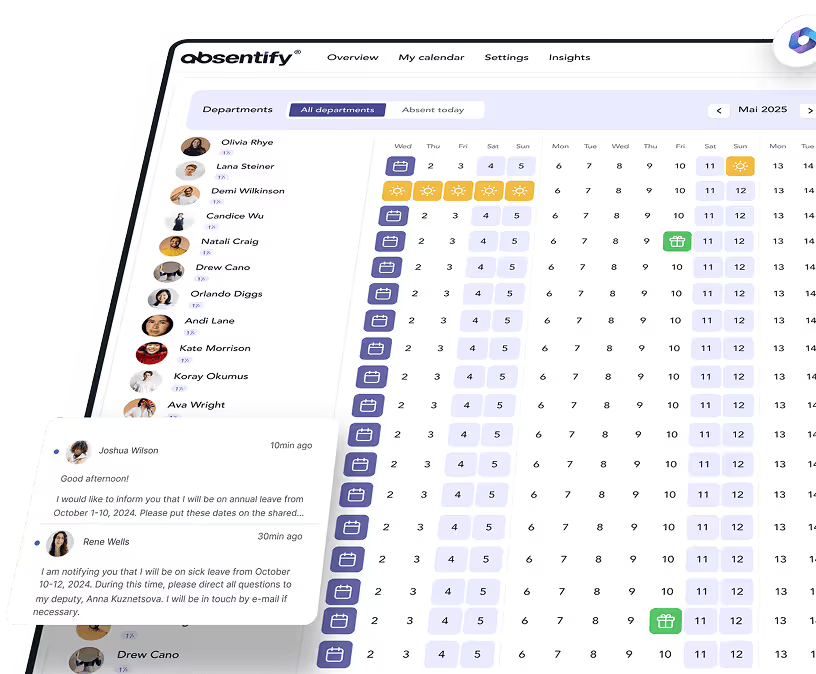
Many employee self-service systems operate as a module within a separate HR platform that employees have to open in addition to Teams and Outlook. absentify provides Employee Self Service for leave and absences directly in Microsoft Teams and Outlook.
- Leave requests and approvals take place directly in Microsoft Teams or Outlook.
- Absences automatically appear in the Outlook calendar, including an automatic out-of-office reply.
- User management can be synchronized through Microsoft Entra ID, so employees, department memberships, and manager roles do not have to be maintained twice.
- Public holiday calendars from 250 countries can be assigned to individual employees.

ESS for leave and absences
With absentify, everyone on your team can check their own leave balance without having to ask you. Start managing absences with absentify today!
Would you like to simplify leave and absence management?
- No credit card required
- Unlimited free access
- Upgrade or cancel at any time
Employee Self Service – Frequently Asked Questions
About the author

Anna Keller
Content manager at absentify
As a blog author at absentify, Anna Keller explains how companies can efficiently manage absences, vacations, and working hours. In her articles, she combines HR practice with Microsoft 365 tips for Outlook and Teams and provides templates, step-by-step instructions, and software comparisons for modern, digital processes.
Share article
More interesting articles
Reducing overtime: rights, duties and the process for employers and teams
Reducing overtime means offsetting accumulated extra hours with time off or payment. Under German employment law, the six calendar months or 24 weeks specified in the German Working Time Act apply solely to offsetting an extended working day against the statutory eight-hour average. Employment contracts, works agreements or collective agreements determine how an overtime balance can be reduced. Where these rules permit time off in lieu, the employer determines its timing and process within the scope of their right to give instructions.
Anna Keller
Content manager at absentify
When does unused leave expire? Deadlines and exceptions that determine your entitlement
Under German law, unused leave expires only under certain conditions: entitlement generally lapses on 31 December, or after the carryover period on 31 March, only if your employer has given you timely and specific notice of the impending expiry and you still do not take the leave. An exception applies in cases of continuous illness.
Anna Keller
Content manager at absentify

Writing an out-of-office message: templates and key details for every occasion
An out-of-office message is an automatic email reply that tells senders about your absence, the period involved, and who to contact instead. Three details are enough for a good out-of-office message: the period, the return date, and a reachable contact.
Anna Keller
Content manager at absentify