

Working Time Law and Breaks: Rules, Duties and Special Rights at a Glance

Working time legislation on rest breaks applies to in-scope employees across the EU and the UK on a binding basis. It governs when a rest break becomes due, how long it must be and what employers must be able to demonstrate during a labour-inspection check. The legal picture is more complex than a simple table suggests — that becomes obvious as soon as shift work, collective agreements and remote-working models enter the equation. Missing or insufficient documentation can have legal consequences when inspectors come knocking.
Working Time Law and Breaks: The Essentials at a Glance
- Under the EU Working Time Directive (2003/88/EC) and the UK Working Time Regulations 1998, an uninterrupted rest break is due once daily working time exceeds 6 hours; many EU jurisdictions raise this to 45 minutes once 9 hours are exceeded. Below 6 hours, there is generally no statutory entitlement to a break.
- The duty to grant breaks applies in the office, in the home office and in shift operations. Collective agreements can adjust the framework; an individual waiver is not enforceable.
- Employers must be able to demonstrate at any inspection that statutory break obligations have been observed. Breaches of break and recording obligations can lead to fines of up to EUR 30,000 in Germany — and to civil-penalty notices and tribunal claims under UK law.
- absentify integrates absence planning, minimum staffing and department calendars directly into Microsoft Teams and Outlook, with no extra tools or manual reconciliation.
From How Many Hours Are You Entitled to a Break?
Breaks can be split, but only into segments of at least 15 minutes each. A single 10-minute break does not satisfy the statutory requirement. The table below summarises the statutory thresholds.
| Daily working time | Statutory minimum break |
|---|---|
| Up to 6 hours | No requirement |
| More than 6 up to 9 hours | At least 30 minutes (UK: 20 minutes) |
| More than 9 hours | At least 45 minutes (DE/many EU jurisdictions) |
The EU Working Time Directive and the UK Working Time Regulations 1998 define rest breaks as scheduled interruptions of working time. Stand-by, on-call duty and short waiting periods between tasks do not count as a break in the legal sense.
Does the 6-Hour Rule Also Apply to Overtime?
Yes. What counts is the actual total working time on the day, including overtime. If a regular 6-hour day is extended by 2 hours of overtime, an entitlement to at least a 30-minute break (20 minutes in the UK) arises.
The calculation is not based on contractual targets but on actual working time. Only once daily working time exceeds 9 hours do most EU jurisdictions require at least 45 minutes. In practice, this matters most where shifts are irregular and last-minute extensions are common.
What Happens If Breaks Are Not Observed?
In Germany, breaches of break obligations can be sanctioned as a regulatory offence under § 22 ArbZG, with fines of up to EUR 30,000. Criminal liability may apply where breaches are committed intentionally and endanger an employee's health, or where certain breaches are persistently repeated. In the UK, the Health and Safety Executive can issue improvement and prohibition notices, and employees can bring a tribunal claim for being denied rest breaks.
Employers must be able to demonstrate during an inspection that statutory break obligations have been observed. Where documentation is insufficient, that can count against the employer in the proceedings.

Which Break Rules Apply in Which Sectors?
National working time laws set the statutory minimum framework. Collective agreements and works agreements often refine this framework in many sectors. Deviations from the statutory baseline are only permitted within the exceptions provided for in the law itself. That applies above all to rules contained in collective agreements — or in works agreements based on a collective agreement.
| Sector | Particularity | Legal basis |
|---|---|---|
| Drivers (HGV, bus) | Driving break after 4.5 hrs of driving, at least 45 min, splittable | EU Regulation 561/2006 |
| Healthcare / nursing | Sector-specific rules on shift work, rotating shifts, on-call duty and breaks depending on the collective agreement in force | Sectoral collective agreements |
| Hospitality | Sectoral agreements regulate break periods on different terms | Hospitality collective agreements |
| Underground mining | When working underground, rest breaks count towards working time | ArbZG / national mining law |
| Office / administration | Statutory minimum, frequently supplemented by a works agreement | Working time legislation |
Works agreements are the third layer of regulation, alongside statute and collective agreements. They make it possible to design break duration, timing and segmentation in ways tailored to the employer, as long as the statutory minimum is preserved.
What Applies to Break Rules in Shift Operations?
In shift operations, the statutory thresholds are in principle the same as for standard daily working time. Permitted deviations may, however, follow from collective agreements — or from works agreements based on them — for example when splitting rest breaks into appropriate short breaks. It is also important to distinguish between a rest break (interruption within a shift) and a daily rest period (the time between two shifts), which must in principle be at least 11 consecutive hours.
In split shifts as found in hospitality or in care, the gap between the two shift segments does not automatically count as a rest break in the legal sense. The condition is that the employee can freely dispose of their time during that period.
Home Office and Remote Work: How Do You Document Breaks Reliably?
Working time law makes no exception for the home office. The duty to provide breaks is unchanged, and the employer's documentation duty remains in force. In practice, the burden of compliance shifts towards the individual employee.
Employers in a home-office context have to communicate break rules in writing and make compliance systematically traceable. Companies that configure working hours in Teams create a shared baseline for everyone, regardless of where they work.
Which Special Rules Apply to Specific Groups of Employees?
National working time laws are general protective laws for adult workers. For certain groups, stricter rules apply that take precedence. Where a company also plans a company-wide shutdown, separate employment-law conditions apply that need to be observed independently of the break rules.
Young workers under the age of 18 are typically subject to youth labour protection rules. In Germany, § 11 JArbSchG applies; in the UK, the Working Time Regulations 1998 set equivalent thresholds for young workers. Lower thresholds apply:
- More than 4.5 up to 6 hours of working time: at least 30 minutes of break
- More than 6 hours of working time: at least 60 minutes of break
- Breaks of less than 15 minutes do not count
Pregnant employees must be released for medical examinations connected with the pregnancy. Breastfeeding employees are entitled, on request, to release for breastfeeding time during the first twelve months after giving birth; this time may not be made up later and may not lead to any loss of pay (see e.g. § 7 MuSchG in Germany; equivalent UK provisions under the Health and Safety at Work etc. Act 1974 and the Workplace (Health, Safety and Welfare) Regulations 1992).
Employees with a recognised severe disability can, in many EU jurisdictions, be exempted from overtime on request. A general statutory entitlement to additional paid recovery breaks does not follow from this rule on its own.
Paid or Unpaid Break: What Does Working Time Law Require?
Working time law does not regulate the question of remuneration. Breaks are in principle not remunerated, unless an employment contract, collective agreement or works agreement provides otherwise.
In practice, this is where misunderstandings often arise. Short breaks and smoking breaks do not count as statutory rest breaks. Whether the employer tolerates or pays for them is at the employer's discretion. There is no statutory obligation to do so.

How Do You Plan Breaks in Microsoft 365 with Confidence?
Many employers know the legal basis. Implementation often falls down on a lack of structure in day-to-day work. Teams with shifts, absences and minimum-staffing requirements quickly run into the limits of a simple spreadsheet.
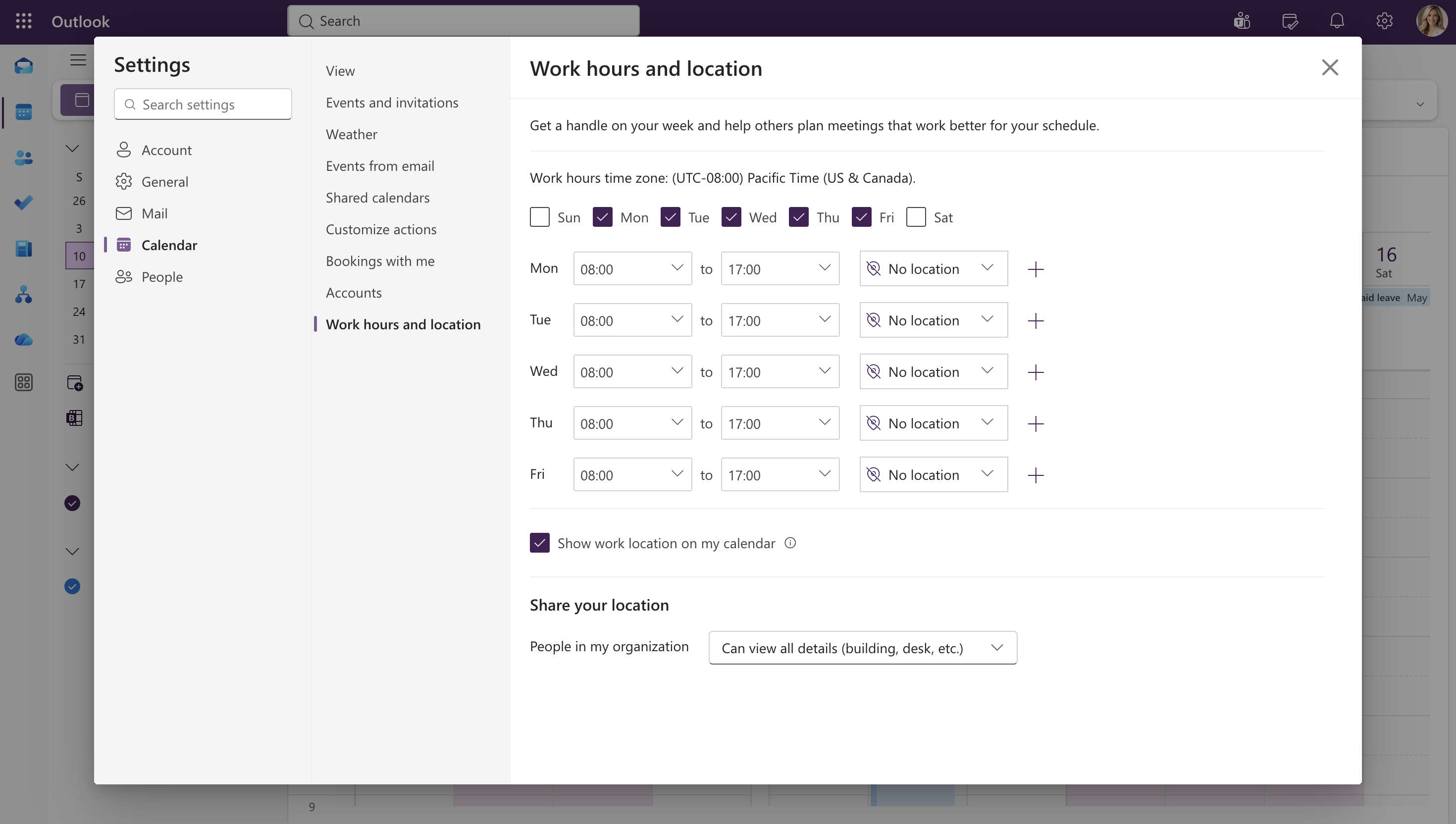
absentify integrates directly with Microsoft Teams and Outlook and supports department-level absence planning, including automatic notifications for clashes. For teams already on MS 365, no additional tool silo is created. Through working hours in Outlook, working times and absences can be kept in view in one place.
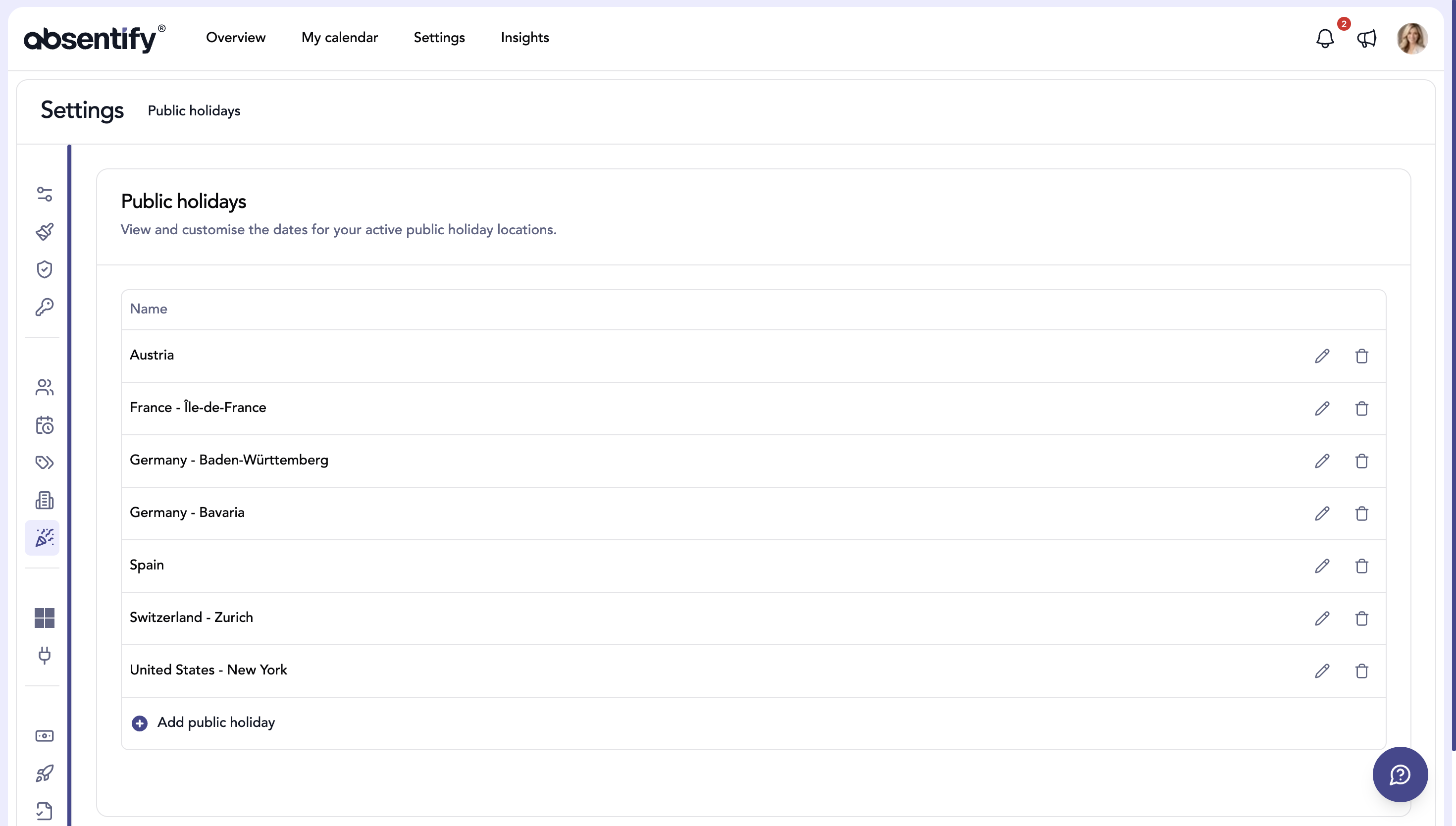
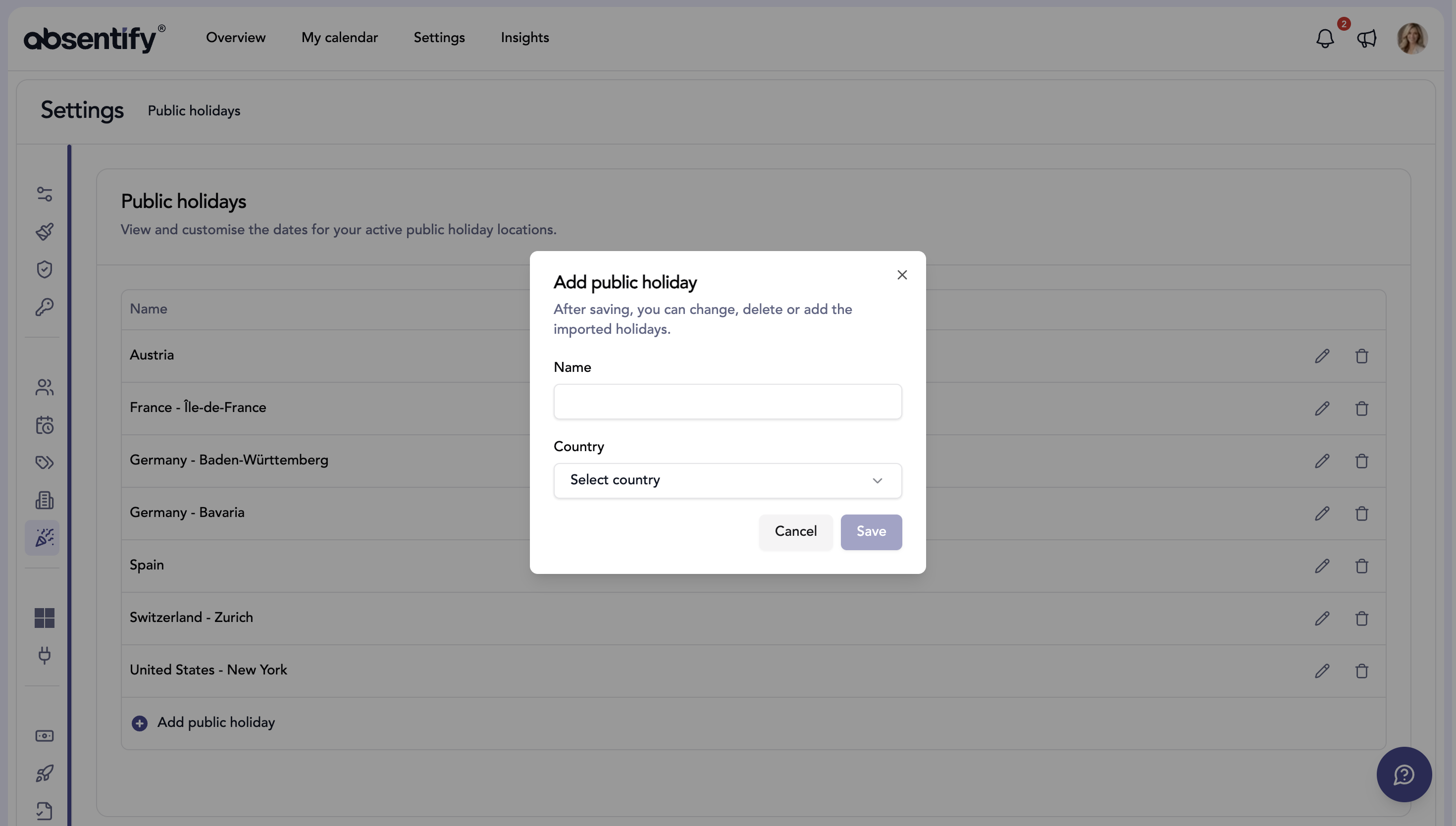
absentify also offers access to public holiday calendars for over 250 countries and regions, which can be applied directly to individual departments or employees. This matters in particular for teams operating across several countries that have to coordinate different public-holiday and absence rules. Teams that have so far run their vacation planning in Excel manually find a structured starting point for switching over.

Map break planning in Microsoft 365 with legal confidence
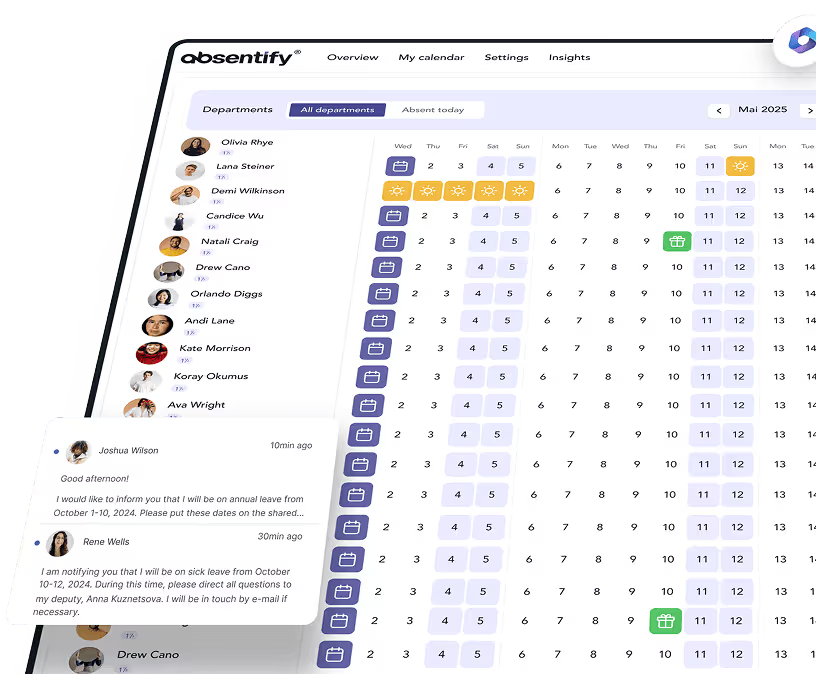
absentify shows you at department level who is absent and when, and raises the alarm before minimum-staffing thresholds are missed. Directly in Teams and Outlook, with no extra setup effort.
What Role Do Absence Tools Play in Team Break Planning?
Absence tools cover forward-looking workforce planning, not time tracking. Their value lies in knowing which employees are absent and when, how many people are away at the same time and whether minimum staffing is secured.
In particular, in operations with shift work or irregular working times, structured absence planning prevents statutory break periods from being missed for organisational reasons. A team that has only two of five staff on duty plans handovers and break periods realistically from the outset when this overview is visible.
Implement Break Planning in Daily Operations Confidently and Without Extra Effort
The statutory requirements on breaks are clear-cut. What's missing in day-to-day operations is the structured implementation. Missing documentation and overlooked special rules lead to fines and, in repeated cases, to criminal consequences.
absentify maps absences, shift schedules and minimum staffing directly inside Microsoft Teams and Outlook. If you want to implement break rules with legal confidence, you need transparency over who is in the business and when.
Your benefits with absentify:
- See at a glance which employees are absent and when, and plan shifts and break periods realistically from the outset.
- Minimum-staffing requirements can be set directly at department level. Conflicts surface before they become a problem.
- absentify fits into Microsoft Teams and Outlook without introducing additional tools or system breaks.
- Public holiday calendars from 250 countries can be applied directly to individual employees or departments — including for internationally distributed teams.
Would you like to simplify your break and absence planning?
- No credit card required
- Unlimited free access
- Upgrade or cancel anytime
Working Time Law and Breaks – Frequently Asked Questions
About the author

Anna Keller
Content manager at absentify
As a blog author at absentify, Anna Keller explains how companies can efficiently manage absences, vacations, and working hours. In her articles, she combines HR practice with Microsoft 365 tips for Outlook and Teams and provides templates, step-by-step instructions, and software comparisons for modern, digital processes.
Share article
More interesting articles
Reducing overtime: rights, duties and the process for employers and teams
Reducing overtime means offsetting accumulated extra hours with time off or payment. Under German employment law, the six calendar months or 24 weeks specified in the German Working Time Act apply solely to offsetting an extended working day against the statutory eight-hour average. Employment contracts, works agreements or collective agreements determine how an overtime balance can be reduced. Where these rules permit time off in lieu, the employer determines its timing and process within the scope of their right to give instructions.
Anna Keller
Content manager at absentify
When does unused leave expire? Deadlines and exceptions that determine your entitlement
Under German law, unused leave expires only under certain conditions: entitlement generally lapses on 31 December, or after the carryover period on 31 March, only if your employer has given you timely and specific notice of the impending expiry and you still do not take the leave. An exception applies in cases of continuous illness.
Anna Keller
Content manager at absentify
Employee Self Service (ESS): Definition, Features, and Benefits for Leave and Absence Management
Employee Self Service (ESS) gives employees access to manage their personal data, leave requests, or absences themselves without coordinating every step with HR. The term originally comes from SAP HR modules and has become an umbrella term for self-service features in human resources. Its benefits are particularly clear in leave and absence management.
Anna Keller
Content manager at absentify