

How to set up substitute arrangements in your company
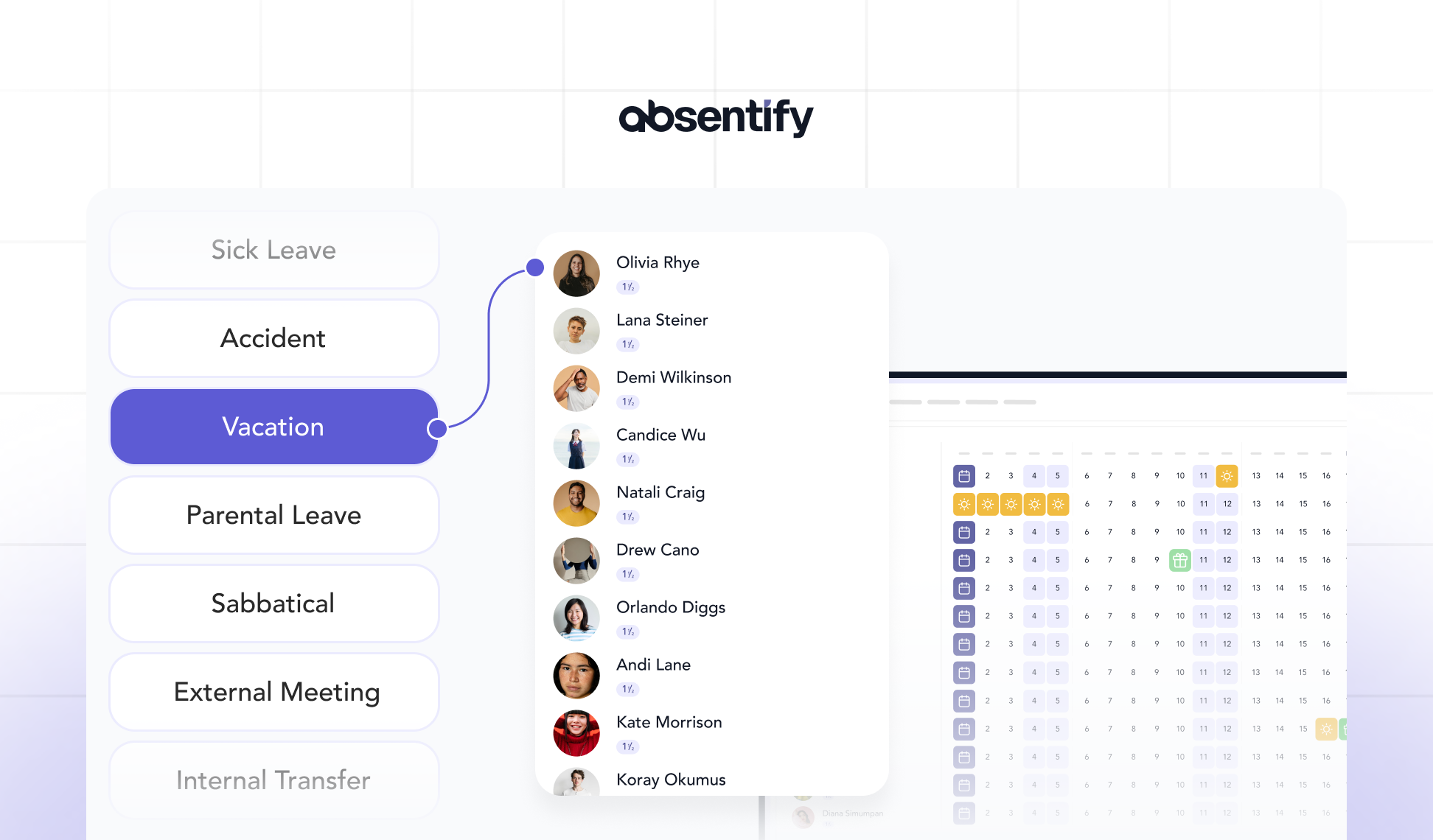
A clear substitute arrangement prevents standstill when employees are absent. It defines who takes over tasks, how handovers work, and which information needs to be accessible. This keeps projects moving forward, even during sickness or vacation. However, substitute arrangements must be binding, transparent, and legally compliant to work effectively.
Substitute arrangements: The essentials at a glance
- A substitute arrangement ensures that tasks continue reliably during sickness, vacation, or other absences.
- The arrangement must be clearly documented, compliant with data protection regulations, and accessible to all employees.
- Regular updates and clear communication channels prevent misunderstandings and duplicate work in substitute arrangements.
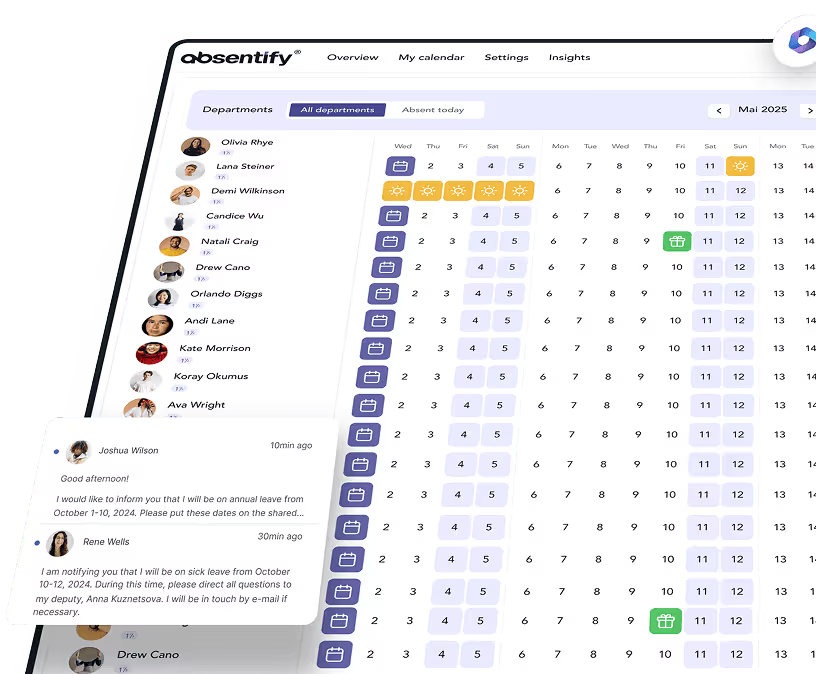
- With absentify, substitutes, leave, and responsibilities can be organized automatically within Microsoft 365 and Teams.
When is a substitute arrangement required in a company?
A substitute arrangement becomes important whenever workflows would stall without a specific person. This applies not only to vacation or sickness but also to planned training, parental leave, or offsite meetings. The key is that tasks, access rights, and responsibilities are clearly defined before the absence occurs.
In which cases is a substitute arrangement required?
- Vacation or planned absence: To ensure that projects and client relationships continue to be managed.
- Sickness or accident: For short-notice cover where immediate operational capacity is essential.
- Parental leave, sabbatical, or training: When employees are unavailable for an extended period.
- Staff changes or departures: To hand over knowledge, documents, and access in a controlled manner.

What legal requirements apply to substitute arrangements?
Substitute arrangements are not explicitly codified in a single statute, but they draw on several employment law principles. They must be documented in a traceable manner, designed in compliance with data protection rules, and coordinated internally.
- Common law duty of care: Employers have a general duty to ensure continuity of operations, which includes making reasonable provisions for employee absences.
- Employment Rights Act 1996 (UK): While primarily covering employee rights, it establishes the framework within which employers can direct work assignments, including substitute duties, as part of normal management prerogatives.
- FLSA & at-will doctrine (US): In the US, employers generally have broad discretion to reassign duties during absences, though collective bargaining agreements may impose restrictions.
- GDPR: Substitutes may only access information they need to fulfill their designated tasks. Data access must follow the principle of least privilege.
What does a legally compliant substitute arrangement look like?
A substitute arrangement must be clear, traceable, and legally sound. It also protects the company from errors in delegated authority, responsibilities, or deadlines. It is essential that substitutes are clearly named and their authority is precisely described.
What must be considered from a legal perspective:
- Written documentation: A substitute arrangement should always be documented, for example in a company policy, a works agreement, or the employment contract.
- Clearly defined authority: The substitute may only act within the scope expressly defined (e.g., decision-making authority, signing documents, approving payments).
- Team transparency: All affected parties must know who takes over which tasks in the event of an absence.
- Management prerogative: The employer's right to direct work forms the basis for assigning and delegating substitute responsibilities.
A legally sound framework prevents misunderstandings, for instance when contracts are signed or deadlines are missed during an absence.
How do you create a substitute arrangement in your company?
An effective substitute arrangement ensures that tasks remain clearly distributed during an absence. It must be traceable, documented in writing, and accessible to all involved parties. The key is that responsibilities, access rights, and communication channels are clearly defined.
Substitute arrangement template: Company-wide fundamentals
At company level, all departments should have a clear framework for how substitute arrangements are to be set up. A template like this can serve as a starting point:
Template: Substitute arrangement in the company
How should a substitute arrangement be communicated?
Once a substitute has been designated, all relevant parties should ideally be notified in writing or via a shared tool. A clear notification includes:
- Period of the absence
- Name and contact details of the substitute
- Notes on ongoing projects or deadlines
A shift schedule in Teams can help make responsibilities visible to everyone and avoid misunderstandings.
What should a substitute agreement include?
A complete substitute arrangement should contain the following elements:
| Element | Description |
|---|---|
| Substitution period | Time frame of the absence for which the arrangement applies (e.g., vacation, sickness, parental leave). |
| Substitute person | Name, position, and contact details of the person taking over responsibilities. |
| Task description | Overview of activities that must continue during the absence. |
| Authority and access rights | Which systems, data, or documents the substitute may use. |
| Communication channels | How clients, colleagues, and partners are informed about the substitution. |
| Return handover | Clear handover of tasks upon the employee's return. |
These elements should be recorded in a standardized document or template. A substitute arrangement template helps create uniform structures across the company and prevents errors.
Template for a substitute arrangement with tasks
Organize substitute arrangements clearly and stress-free
Plan absences and substitutions directly in Outlook or Microsoft Teams. With absentify, you keep track of responsibilities, vacation times, and handovers — without manual coordination.

Start for free now
No credit card required—enjoy unlimited access with our free plan. You can upgrade or cancel anytime.
How do you implement a substitute arrangement for vacations?
A working vacation substitute arrangement ensures that no tasks are left unattended and that everyone knows who is responsible for what. It creates transparency and prevents bottlenecks, especially in teams with many projects running in parallel.
What goes into preparing a vacation substitution?
Before the vacation begins, every department should carry out clear vacation planning. This includes:
- Conduct a handover meeting: Discuss current tasks, open deadlines, and project statuses with the substitute.
- Create documentation: Prepare a brief overview with access credentials, contacts, and priorities.
- Update calendars: Enter the absence and substitution in the Outlook or Teams calendar.
- Define communication: Inform colleagues, clients, and partners about the substitution.
What are the benefits of a clearly defined vacation substitution?
- No tasks are left unaddressed
- Clients receive prompt responses
- Internal processes continue without interruption
- Employees can enjoy their vacation stress-free
How can substitute arrangements be established permanently in a company?
A substitute arrangement only works if it is a fixed part of the organizational structure. Individual agreements are often insufficient, as they are quickly lost during staff changes or longer absences. The goal is a clear structure that is binding for all employees.
Steps for permanently implementing substitute arrangements
- Define responsibilities: Each department should designate fixed substitute partners who cross-train each other.
- Document the arrangement in writing: A documented substitute arrangement creates commitment and avoids misunderstandings.
- Clarify access rights: The substitute must have access to relevant emails, documents, and systems.
- Standardize processes: Regular handovers and documentation templates secure the flow of information.
Organize substitute arrangements digitally and keep them under control
A good substitute arrangement depends on clear visibility and well-defined processes. When you plan absences transparently and assign responsibilities clearly, you prevent standstill and misunderstandings. With absentify, vacation times, substitutions, and responsibilities can be managed directly in Microsoft 365 and Teams — clearly, automatically, and without duplicate maintenance.
Your benefits with absentify:
- Automatic assignment of substitutes during vacation or sickness
- Direct overview of all absences in Outlook and Teams
- Clear responsibilities through a transparent calendar view
- Consistent planning without spreadsheets or email chaos
Would you like to simplify your substitute arrangements?
- No credit card required
- Unlimited free access
- Upgrade or cancel anytime
Substitute arrangements – Frequently asked questions and answers
About the author

Anna Keller
Content manager at absentify
As a blog author at absentify, Anna Keller explains how companies can efficiently manage absences, vacations, and working hours. In her articles, she combines HR practice with Microsoft 365 tips for Outlook and Teams and provides templates, step-by-step instructions, and software comparisons for modern, digital processes.
Share article
More interesting articles
Reducing overtime: rights, duties and the process for employers and teams
Reducing overtime means offsetting accumulated extra hours with time off or payment. Under German employment law, the six calendar months or 24 weeks specified in the German Working Time Act apply solely to offsetting an extended working day against the statutory eight-hour average. Employment contracts, works agreements or collective agreements determine how an overtime balance can be reduced. Where these rules permit time off in lieu, the employer determines its timing and process within the scope of their right to give instructions.
Anna Keller
Content manager at absentify

When does unused leave expire? Deadlines and exceptions that determine your entitlement
Under German law, unused leave expires only under certain conditions: entitlement generally lapses on 31 December, or after the carryover period on 31 March, only if your employer has given you timely and specific notice of the impending expiry and you still do not take the leave. An exception applies in cases of continuous illness.
Anna Keller
Content manager at absentify

Employee Self Service (ESS): Definition, Features, and Benefits for Leave and Absence Management
Employee Self Service (ESS) gives employees access to manage their personal data, leave requests, or absences themselves without coordinating every step with HR. The term originally comes from SAP HR modules and has become an umbrella term for self-service features in human resources. Its benefits are particularly clear in leave and absence management.
Anna Keller
Content manager at absentify