

Company vacation planning: legally prepared and organised without chaos
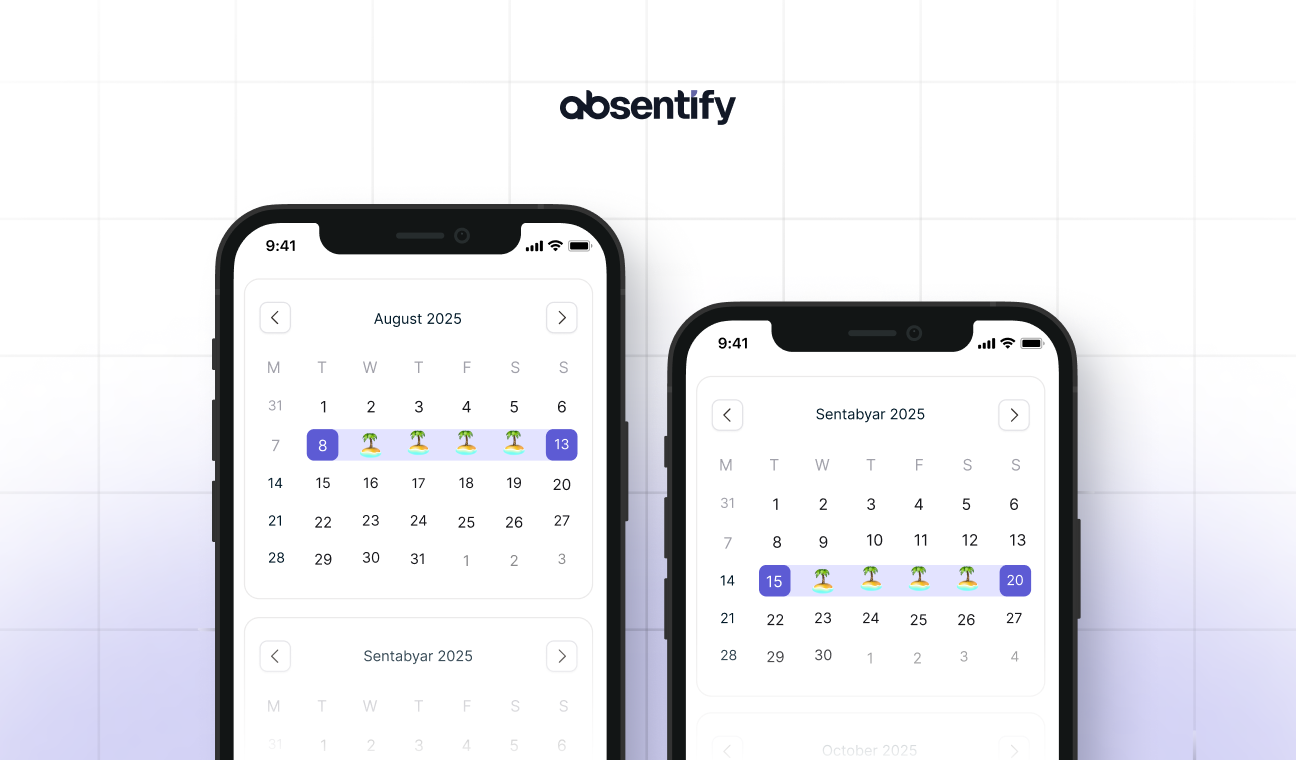
Company vacation planning is the process by which employees and managers coordinate leave requests, avoid staffing shortages and comply with legal requirements. Clear rules and a shared calendar make the difference between chaos and clarity.
Vacation planning: the essentials at a glance
- The statutory minimum entitlement to annual leave is 20 working days per year for a five-day week.
- Clear deadlines, a rotation system for bridge days and a shared calendar prevent most conflicts in vacation planning.
- The standard Outlook calendar shows absences without automatically handling approvals or calculating remaining leave.
- absentify automates vacation planning and absence management directly in Outlook, Teams and Microsoft Entra ID, including approvals and remaining-leave calculation.
Why does company vacation planning become a struggle every year?
Company vacation planning becomes a struggle when several employees want the same dates and remaining leave is still open shortly before year-end. Excel spreadsheets make the problem worse: multiple people edit the same file, formulas shift, and in the end the balances no longer add up.
For HR, that means double work. Requests are recorded twice, follow-up questions pile up, and nobody can tell at a glance how many people in a department will be away at the same time in August. This is exactly where structured company vacation planning comes in: it creates clarity from the start instead of fixing problems after the fact.
Incorrectly calculated remaining leave also creates legal risk, because employers must be able to prove balances correctly at any time. Frequent disputes over bridge days or company shutdowns then hurt team morale — and that is precisely what clear rules can prevent from the outset.

What does the law say about vacation planning?
Germany’s Federal Vacation Act (BUrlG) sets the minimum entitlement to annual leave at 24 working days for a six-day week — in practice usually 20 days for a five-day week. Under Section 7(1) BUrlG, employers must give priority to employees’ leave preferences. A refusal is only permitted where urgent operational reasons or the preferential wishes of other employees apply — for example parents with school-age children.
Unused leave generally expires at year-end; where a transfer is allowed, usually by 31 March of the following year. Case law requires employers to notify employees actively, clearly and in good time of impending expiry — otherwise the entitlement may remain. In addition, the works council has a say under Section 87(1) No. 5 BetrVG on general leave principles and company shutdowns.
If an employee falls ill during already approved leave, days covered by a medical certificate do not count as leave days under Section 9 BUrlG. Part-time employees receive leave pro rata based on their working days per week, and new hires only receive the full entitlement after six months of employment — before that, only a pro-rata share.
How do you make vacation planning fair for your whole team?
Fair vacation planning works with clear rules that apply equally to the entire department and are documented in writing. What applies to leave also applies to the rest of absence planning: sickness, special leave or home-office days belong in the same overview so nobody double-books.

Set clear deadlines
A deadline for annual planning — for example end of January — gives everyone time for their requests and enough lead time for adjustments. A vacation-planning info note at the start of the year tells your team about that deadline, open remaining-leave balances and the applicable rules early on.
Rotate bridge days
A rotation system ensures popular dates such as bridge days or the week between Christmas and New Year are shared fairly over the years. Nobody blocks the same days two years in a row, and team satisfaction rises noticeably.
Use remaining leave in good time
The best way to clear remaining leave is with fixed checkpoints in the final quarter, when managers actively review open days with their teams. A quick look at the current balance is enough to course-correct early, instead of approving every request at once just before 31 March.
Vacation planning in Outlook: what does the standard calendar deliver?
Vacation planning with Outlook works through a shared group calendar where all employees enter their absences. If you choose Outlook for company vacation planning, a dedicated department calendar is worth it — rather than mixing private and work appointments.
Outlook vacation planning alone only shows who is away. A real approval workflow, automatically calculated remaining leave or minimum staffing per department are missing entirely from the standard calendar. That is often enough for small teams; in larger departments gaps appear quickly.
Outlook vacation planning with absentify: automated processes in Teams
Team vacation planning in the Outlook calendar can be extended with absentify without leaving the familiar interface. absentify syncs with Outlook and Microsoft Teams and takes over the approval processes the standard calendar does not cover.
In concrete terms for your team:
- Automatic sync with Microsoft Entra ID, so new employees appear in the vacation calendar without extra effort.
- Approval workflows directly in Teams, so managers approve requests with one click instead of exchanging emails.
- Automatic calculation of leave days and remaining leave, so nobody has to recalculate manually.
- Minimum staffing per department, so a request is flagged automatically if too many people would be away at the same time.
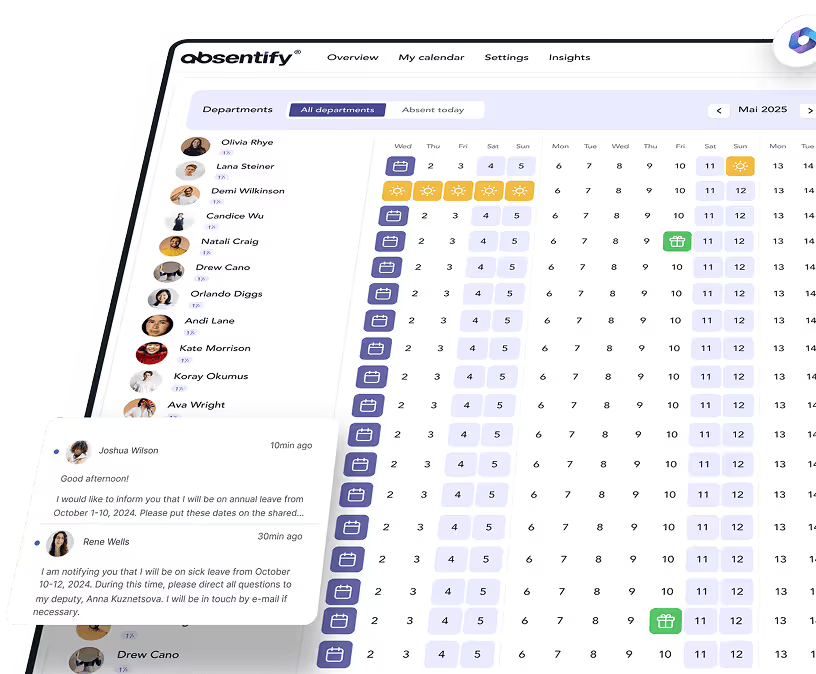
If, for example, half of a sales team requests the same week in summer, absentify shows the overlap in the calendar immediately — before a manager approves the request. The department stays covered without anyone manually cross-checking requests.
Want to simplify your absence management?
- No credit card required
- Unlimited free access
- Upgrade or cancel anytime
How can you organise vacation planning clearly?
Vacation planning with fewer errors works with a vacation-planning tool that brings requests, approvals and remaining leave together in one place, instead of spreading data across multiple files. Paper cards and Excel lists, by contrast, demand a lot of manual work — and that is exactly where most mistakes happen.
Excel vacation planning: where does the spreadsheet hit its limits?
An Excel sheet is quick to set up and costs nothing at first. As soon as several people access the same file at once, version conflicts appear and formulas for remaining leave drift. From around ten employees, the maintenance effort of an Excel sheet can outweigh the benefit, and a dedicated vacation planner takes over versioning and calculation automatically.
Standalone vacation-planner apps outside Microsoft 365 solve the overview problem, but bring their own inbox and interface. Employees have to open another program on top of Outlook and Teams. That context switch costs time in practice and leads to forgotten entries.
absentify: absence planning directly in Microsoft 365
absentify maps complete vacation and absence planning in Outlook, Teams and Microsoft Entra ID, so you do not need a separate interface in day-to-day work. Every employee sees their personal calendar with remaining leave without having to calculate it themselves.
| Excel | Outlook calendar | absentify | |
|---|---|---|---|
| Ready to use with no setup | ✓ | ✓ | ✗ |
| Approval workflow included | ✗ | ✗ | ✓ |
| Calculation without custom formula maintenance | ✗ | ✗ | ✓ |
| Minimum-staffing warning without DIY build | ✗ | ✗ | ✓ |
absentify creates dedicated absence types per department so leave, sickness or parental leave stay cleanly separated. A leave request can be submitted and approved in a few clicks, and the related vacation calendar shows everyone immediately who is away when. For high-demand periods, absentify also offers a vacation blackout that automatically blocks certain windows for new requests.
For larger teams, dedicated vacation planner software pays off as well. It combines departments, working hours and public-holiday calendars from more than 250 countries in one place.
How structured vacation planning with absentify works in Microsoft 365
Company vacation planning works when clear deadlines, fair rules and a shared calendar come together. As soon as Outlook or Excel hit their limits, absentify takes over approvals, calculation and overview directly in Microsoft Teams. Remaining leave stays visible towards year-end, and nobody has to re-enter requests twice.
For HR that means fewer follow-ups, less Excel maintenance and a calendar everyone already knows. Legal deadlines stay easier to track instead of turning into a year-end calculation project.
Your benefits with absentify:
- You see all team absences at a glance without comparing multiple files.
- You skip manual calculations because absentify tracks remaining leave automatically.
- You reduce the risk of staffing shortages with fixed minimum staffing per department.
- You keep working in Outlook and Teams without learning another programme.

Automate your vacation planning with absentify
Organise vacation planning without Excel chaos — with automatic approvals and remaining-leave calculation in Outlook and Teams.
Vacation planning – frequently asked questions
About the author

Anna Keller
Content manager at absentify
As a blog author at absentify, Anna Keller explains how companies can efficiently manage absences, vacations, and working hours. In her articles, she combines HR practice with Microsoft 365 tips for Outlook and Teams and provides templates, step-by-step instructions, and software comparisons for modern, digital processes.
Share article
More interesting articles

Reducing overtime: rights, duties and the process for employers and teams
Reducing overtime means offsetting accumulated extra hours with time off or payment. Under German employment law, the six calendar months or 24 weeks specified in the German Working Time Act apply solely to offsetting an extended working day against the statutory eight-hour average. Employment contracts, works agreements or collective agreements determine how an overtime balance can be reduced. Where these rules permit time off in lieu, the employer determines its timing and process within the scope of their right to give instructions.
Anna Keller
Content manager at absentify

When does unused leave expire? Deadlines and exceptions that determine your entitlement
Under German law, unused leave expires only under certain conditions: entitlement generally lapses on 31 December, or after the carryover period on 31 March, only if your employer has given you timely and specific notice of the impending expiry and you still do not take the leave. An exception applies in cases of continuous illness.
Anna Keller
Content manager at absentify

Employee Self Service (ESS): Definition, Features, and Benefits for Leave and Absence Management
Employee Self Service (ESS) gives employees access to manage their personal data, leave requests, or absences themselves without coordinating every step with HR. The term originally comes from SAP HR modules and has become an umbrella term for self-service features in human resources. Its benefits are particularly clear in leave and absence management.
Anna Keller
Content manager at absentify