

Employee experience: strategy, legal framework and measures for 2026
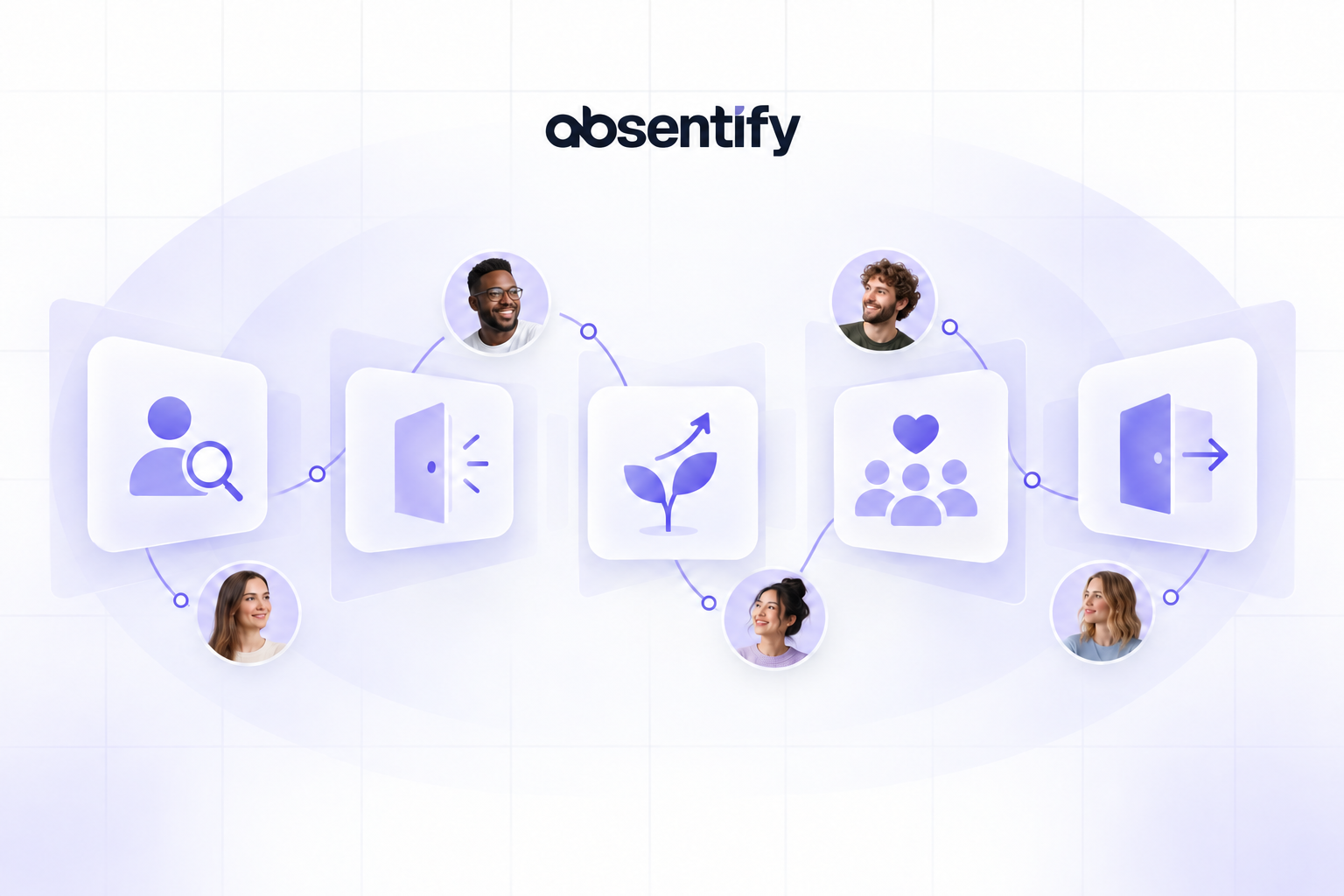
Employee experience covers every impression an employee gathers in a company, from applying for a role to leaving the organisation. For HR leaders in medium-sized businesses, it shapes retention, productivity and the ability to keep good people amid skills shortages.
Employee experience: the essentials at a glance
- Employee experience is the sum of everything an employee experiences across the employee lifecycle, from recruitment and onboarding to daily work and departure.
- Employee experience covers the overall workplace experience, employee engagement measures emotional commitment as one part of it, and employer branding addresses potential applicants outside the company.
- In Germany, the GDPR applies when employee data is collected, and standardised employee surveys may trigger works council co-determination rights under Section 94 of the Works Constitution Act.
- absentify improves everyday employee-experience touchpoints in Microsoft 365 by handling leave requests, out-of-office messages and calendar information directly in Teams and Outlook without requiring employees to switch tools.

What does employee experience include?
Employee experience is the sum of the impressions, interactions and emotions an employee gathers throughout their time with a company. It starts with the first contact during recruitment and continues through onboarding, daily work and development to the exit interview.
The concept transfers the idea of customer experience to a company's own workforce. Just as a company designs every customer touchpoint, it also shapes its employees' touchpoints. The change in perspective means viewing everyday work through employees' eyes rather than through HR processes.
For you as an HR leader, that means individual benefits do not define the employee experience. The quality of every moment an employee has with your company does. A smooth first day contributes just as much as a leave request approved in two clicks.
How does employee experience differ from employee engagement and employer branding?
Employee experience, employee engagement and employer branding are sometimes used interchangeably, but they describe three different things. Employee experience is the umbrella term for the overall experience of work. Employee engagement describes an employee's emotional commitment to their work and is therefore an outcome of a good employee experience. Employer branding looks outward and shapes how potential applicants see the company as an employer.
| Criterion | Employee experience | Employee engagement | Employer branding |
|---|---|---|---|
| Core function | Overall workplace experience | Emotional commitment to work | External image as an employer |
| Perspective | Employee's view across the full lifecycle | Inner attitude and motivation | Potential applicants' view |
| Time horizon | Continuous across every stage | Variable and often phase-specific | Medium to long term |
| Typical metric | Touchpoint satisfaction, eNPS | Engagement score, absence days | Applicant numbers, reach |
The boundaries between these areas remain fluid. A strong employee experience almost automatically increases engagement, while high engagement strengthens the employer's image because satisfied employees represent the company externally. The three areas therefore influence one another.
Why is a good employee experience so important?
A consistently positive employee experience matters more as three shifts in the labour market converge: skills shortages, generational change in the workforce and the spread of remote and hybrid work. Each shift increases the pressure to shape the experience of work actively.
- Skills shortages shift the balance of power: Qualified applicants choose between several offers, and their day-to-day experience becomes a central argument that salary alone cannot replace.
- Generational change brings younger professionals into companies, and they value development, participation and a balanced work-life relationship. Their daily experience matters more to them than traditional status symbols such as a company car.
- Remote and hybrid work move many touchpoints into applications and software. If an employee is in the office only two days a week, the quality of the tools shapes their experience. A cumbersome leave request or an unknown colleague's absence status has a greater impact in a distributed team than in a familiar office setting.

Create better everyday moments with absentify
Manage absences where your team already works.
How can you build a positive employee experience?
A sustainable employee-experience strategy follows the employee lifecycle. It considers every stage an employee goes through and designs the defining moments within it. This gives you a path to follow.
The five stages of the employee lifecycle
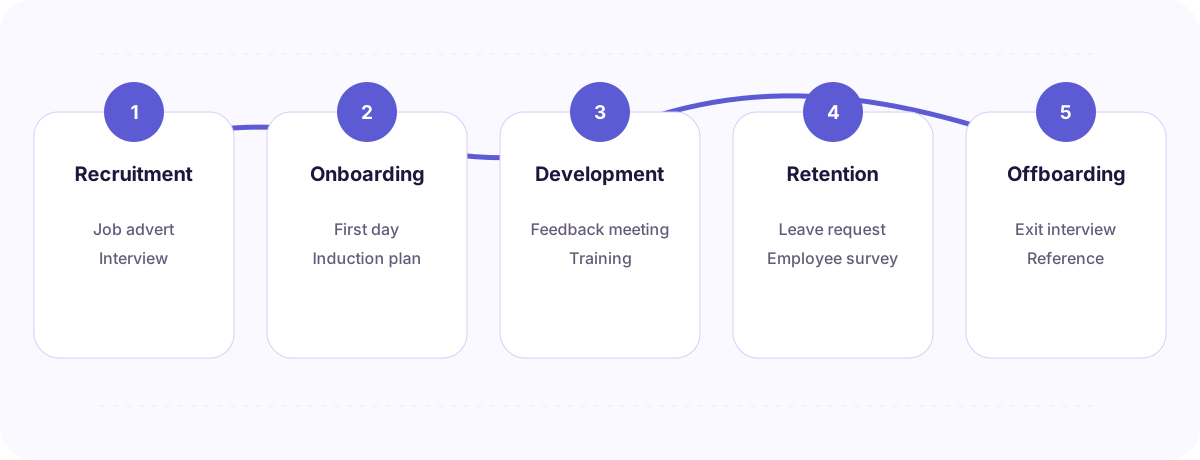
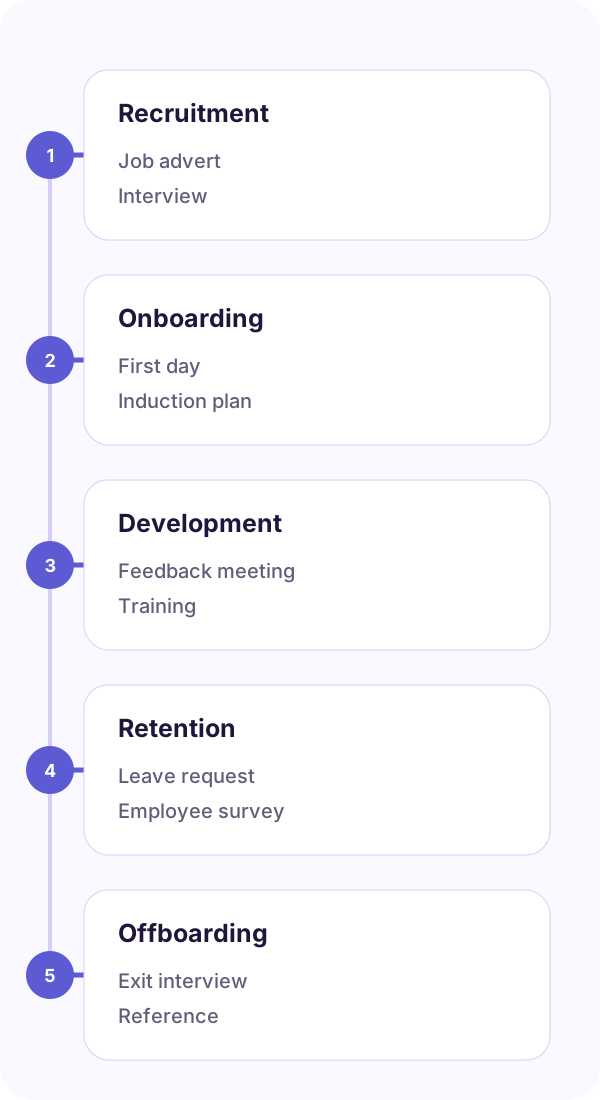
The employee lifecycle divides the employee experience into five stages, each with its own important moments:
- Recruitment: How clear and informative is the job advert, how quickly does the company respond, and how does the interview feel?
- Onboarding: Is the equipment ready on day one, does the new colleague know their contacts, and is the first week structured?
- Development: Is there a plan for training, feedback and progression?
- Retention: Do appreciation and participation continue over the years?
- Offboarding: Is the departure handled fairly, and is the exit interview used to make improvements?
Every stage offers many points where the employee experience can be assessed. Many companies make the mistake of investing only in recruitment and leaving the later stages to look after themselves.
Which digital moments shape the employee experience?
Small, recurring moments in everyday work have the greatest effect because employees experience them hundreds of times a year. These moments run throughout the working day and can be designed deliberately:
- Prepared workflows and automation: A new employee automatically receives access, checklists and the right contacts on day one.
- Personalised development opportunities: Regular invitations to internal and external training matched to an employee's role and goals create perspective and show appreciation. A personal invitation to a suitable course makes someone feel seen.
- A self-service learning library: A catalogue of courses and materials that everyone can access independently makes learning a regular part of work.
- An open team calendar: When everyone can see who is present and who is on leave, they can plan tasks and absences without questions or waiting.
- A smooth leave request: Ideally, it is integrated into the calendar or planning software employees already use, so there is no external tool or additional route.
- Self-service for personal data: Employees maintain their address, bank details or absences themselves instead of waiting for HR to respond.
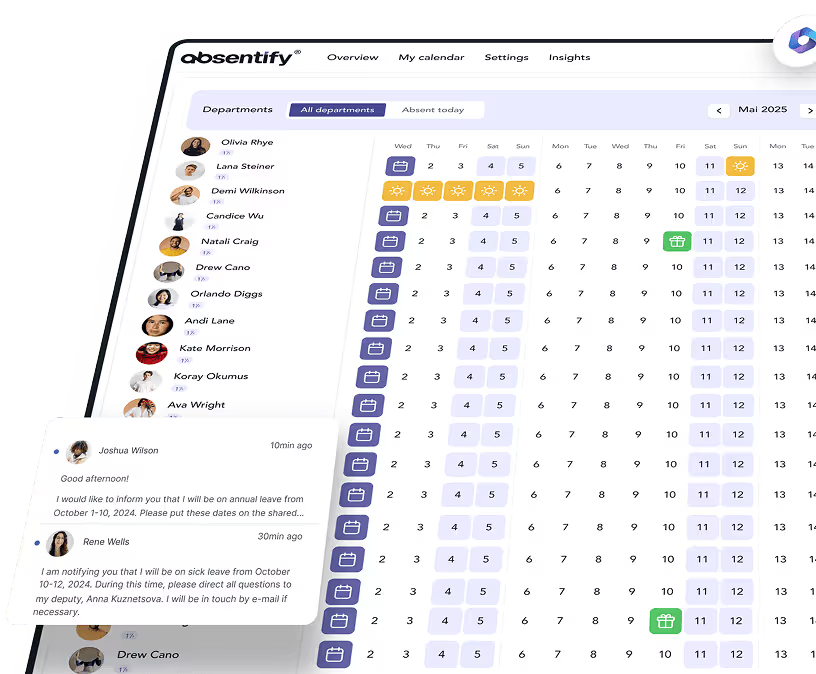
These moments have one thing in common: they rarely feature in a classic strategy, but still shape the experience more strongly than a one-off event. absentify addresses these moments by handling leave requests, approvals and absences directly in Microsoft Teams and Outlook. Calendar synchronisation keeps absences visible where the team already works.
Which legal aspects of employee experience should I consider?
When you measure and actively shape employee experience in Germany, works council co-determination and GDPR requirements may apply.
The works council has a right of co-determination for personnel questionnaires under Section 94 of the German Works Constitution Act. For employee surveys, co-determination depends on the specific design; it does not arise automatically for every standardised survey. Technical systems capable of monitoring behaviour or performance are also subject to co-determination under Section 87(1)(6) of the German Works Constitution Act. In practice, discuss a feedback tool or recurring survey with the works council before rollout.
For data protection, the data-minimisation principle in Article 5 GDPR applies. Collect only the data you need for the relevant purpose and establish a lawful basis under Article 6 GDPR in advance. In sentiment surveys, anonymity encourages honest answers and reduces data-protection risk at the same time.
This information is not legal advice. For specific questions about introducing survey systems, consult your works council and a data protection officer.
How can I measure employee experience?
You can measure employee experience with three metrics: employee Net Promoter Score (eNPS), employee turnover and time to productivity. These values can be calculated without a dedicated people-analytics team and provide a robust view of the working experience.
eNPS is based on asking how likely an employee is to recommend the company as an employer. The answer is given on a scale from 0 to 10.
| Metric | Formula and guidance | Example |
|---|---|---|
| eNPS | Percentage of promoters (scores 9 and 10) minus percentage of detractors (scores 0 to 6). Passives (scores 7 and 8) count towards the total number of responses but are assigned to neither promoters nor detractors. The value ranges from -100 to +100. Negative values are generally poor, positive values from 20 are considered normal, and values from 50 are exceptionally good. | 55% promoters minus 15% detractors = eNPS of 40 |
| Turnover rate | Departures divided by average employee headcount, multiplied by 100. Values up to 15% are considered acceptable. Good values are below 12%. | 8 departures among 100 employees = 8% per year |
| Time to productivity | Time from the first working day to full productivity. Good values are under 3 weeks for simple tasks, under 60 days for skilled roles, and between 6 and 12 months for specialists and leaders. | The new employee reaches full productivity after 10 weeks |
A rising eNPS combined with falling turnover indicates that your measures are working. Time to productivity mainly reveals weaknesses in onboarding because a long ramp-up period often points to unclear processes. The stated benchmarks are not universally applicable thresholds; their interpretation depends on factors such as industry, role and comparison group. You can find more HR metrics in our article on HR metrics.
How do I improve employee experience?
You can improve employee experience in a medium-sized business by addressing everyday touchpoints. This checklist is designed for teams without a dedicated EX department and can be implemented without a large budget.
- Map touchpoints: List every moment an employee goes through during the year, from leave planning to feedback discussions. Mark where friction exists or could arise.
- Structure onboarding: Define a fixed plan for the first week, including equipment, contacts and an agenda. This reduces time to productivity.
- Remove friction from routine processes: Bring recurring processes such as leave requests, sickness notifications and out-of-office messages into the software your team already uses.
- Gather feedback regularly: Replace one large annual survey with short, anonymous pulse checks every few months. This helps you see changes in sentiment earlier.
- Turn feedback into action: After every survey, communicate clearly what will change. This shows employees that their feedback is heard and leads to action.
- Take offboarding seriously: Hold structured exit interviews and use the insights for future hiring.
The strongest levers lie in recurring processes rather than one-off activities. This is where good leave management software helps by removing friction from a process every employee goes through several times a year.
Better everyday moments make your team happier
A consistently positive employee experience plays a major role in whether skilled employees stay or leave. It starts during recruitment, continues through onboarding, development and retention to departure, and becomes most visible in small recurring moments. When you make these moments smooth, you strengthen both engagement and retention. absentify can help at everyday touchpoints:
- You handle leave requests and approvals directly in Microsoft Teams and Outlook without colleagues opening another tool.
- You give every employee a personal calendar with their remaining leave allowance, removing the need for individual enquiries.
- You keep absences visible across the team and avoid overlapping requests.
Get started with absentify directly in Microsoft 365
absentify brings smooth leave management to the place where your team already works: Microsoft Teams and Outlook. Personal calendars, transparent approval routes and automatic notifications remove friction from a process every employee completes several times a year. This lets you improve an important everyday employee-experience moment without launching a large project.
Start for free now
- No credit card required
- Unlimited free access
- Upgrade or cancel anytime
Employee experience – frequently asked questions
About the author

Anna Keller
Content manager at absentify
As a blog author at absentify, Anna Keller explains how companies can efficiently manage absences, vacations, and working hours. In her articles, she combines HR practice with Microsoft 365 tips for Outlook and Teams and provides templates, step-by-step instructions, and software comparisons for modern, digital processes.
Share article
More interesting articles
Reducing overtime: rights, duties and the process for employers and teams
Reducing overtime means offsetting accumulated extra hours with time off or payment. Under German employment law, the six calendar months or 24 weeks specified in the German Working Time Act apply solely to offsetting an extended working day against the statutory eight-hour average. Employment contracts, works agreements or collective agreements determine how an overtime balance can be reduced. Where these rules permit time off in lieu, the employer determines its timing and process within the scope of their right to give instructions.
Anna Keller
Content manager at absentify
When does unused leave expire? Deadlines and exceptions that determine your entitlement
Under German law, unused leave expires only under certain conditions: entitlement generally lapses on 31 December, or after the carryover period on 31 March, only if your employer has given you timely and specific notice of the impending expiry and you still do not take the leave. An exception applies in cases of continuous illness.
Anna Keller
Content manager at absentify
Employee Self Service (ESS): Definition, Features, and Benefits for Leave and Absence Management
Employee Self Service (ESS) gives employees access to manage their personal data, leave requests, or absences themselves without coordinating every step with HR. The term originally comes from SAP HR modules and has become an umbrella term for self-service features in human resources. Its benefits are particularly clear in leave and absence management.
Anna Keller
Content manager at absentify