

Vacation entitlement during sick leave: How to protect your time off
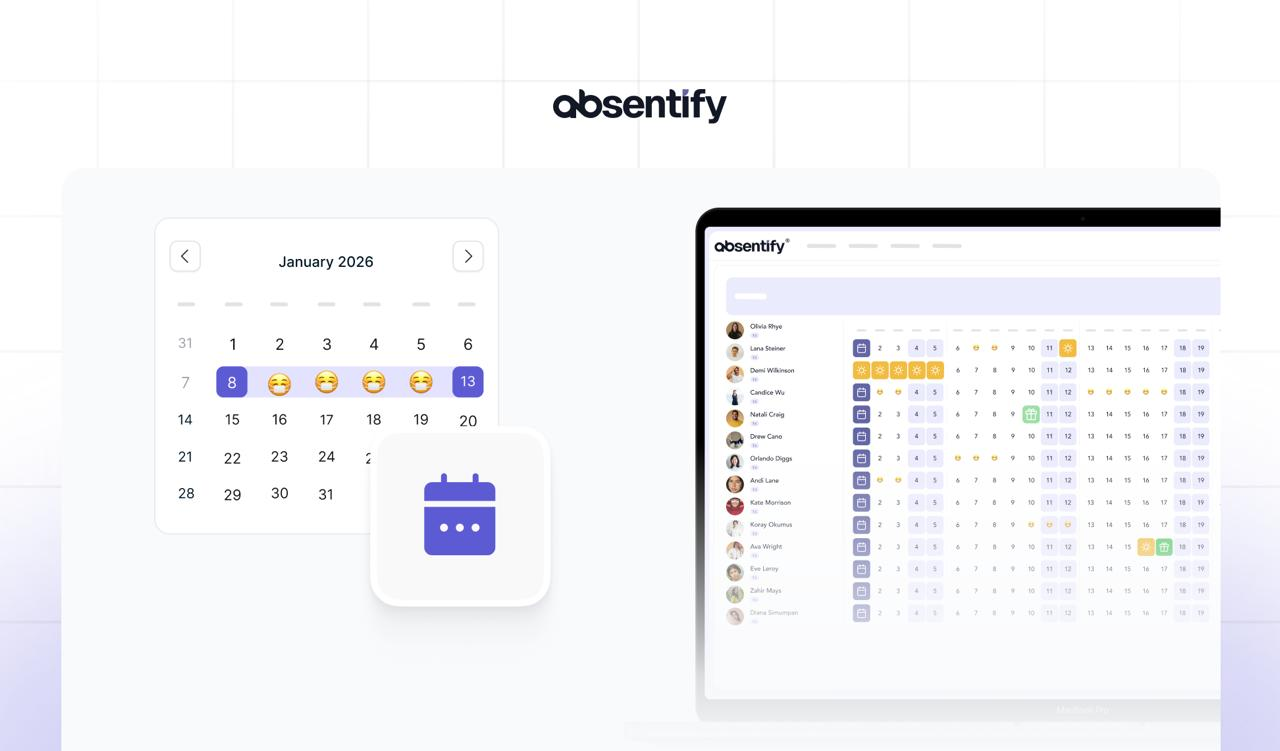
Vacation entitlement does not automatically disappear when you fall ill. In many jurisdictions, the law protects employees who can prove they were unfit for work during their scheduled leave. What matters is when the illness occurs and how you report it. By following the right steps, you protect your vacation days and avoid disputes with your employer.
Vacation entitlement during sick leave: The essentials at a glance
- If you fall ill during vacation and provide a medical certificate, those sick days are not deducted from your annual leave in most European and many international jurisdictions.
- Under EU law, unused vacation entitlement can carry over for up to 15 months after the end of the leave year if you are on long-term sick leave.
- Once you recover, you can request replacement leave for the days you were ill during your vacation.
- With absentify, you can track vacation entitlements and sick leave directly in Microsoft 365 — no spreadsheets needed.
How is vacation entitlement during sick leave regulated by law?
In the European Union, the Working Time Directive (2003/88/EC) guarantees a minimum of four weeks' paid annual leave. The Court of Justice of the European Union (CJEU) has consistently ruled that sick days during vacation must not be counted as annual leave, provided the employee submits a medical certificate. This principle protects your right to rest and recovery.
In the UK, similar protections apply. Under the Working Time Regulations 1998, workers are entitled to 5.6 weeks of paid annual leave. Case law has confirmed that employees who fall ill during holiday can reclaim those days, as long as they provide timely medical evidence.
How to report illness during vacation correctly
- Notify immediately: Inform your employer as soon as possible — by email or phone — that you are unfit for work.
- Submit a medical certificate: The certificate must cover the period of incapacity. In many countries, it should be provided within three calendar days, unless your employer requires earlier notification.
- Keep records: Retain a copy of the certificate until the leave adjustment is confirmed in your personnel file.
If you fall ill while traveling abroad, you may also need to notify your health insurer and inform your employer digitally or by phone.
HR departments should record all data in their system to ensure that vacation and sick leave are correctly separated.
Who is entitled to vacation protection during sick leave?
The rules apply to all employees, regardless of working hours or contract type:
- Full-time and part-time workers
- Fixed-term employees
- Apprentices and trainees
- Long-term sick employees, as long as the employment relationship continues
When does unused vacation expire during long-term illness?
During long-term illness, vacation does not automatically expire at the end of the year. According to the CJEU ruling in KHS v Schulte (C-214/10), unused leave can be carried over for up to 15 months after the end of the leave year.
Example: Vacation from 2024 can be taken until 31 March 2026 if you remain on long-term sick leave.
How can companies document vacation entitlements during sick leave?
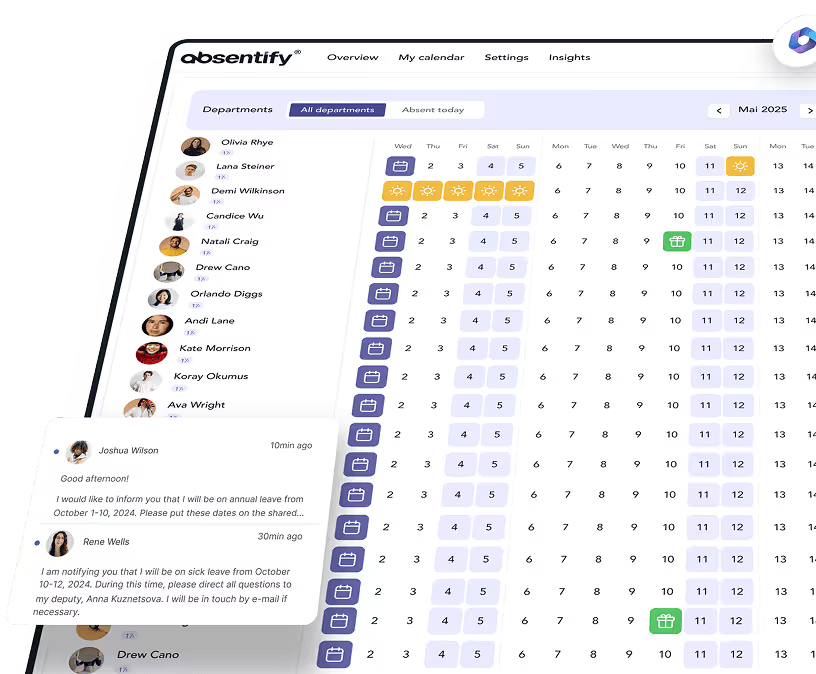
HR teams should record sick notes and vacation periods digitally to avoid legal errors. In Microsoft 365, absences can be displayed directly in Outlook or Teams. This makes it clear who is actually available and when leave needs to be rescheduled.

Simplify leave management during sick leave — with absentify
Manage sick notes and vacation entitlements directly in Teams, Outlook, and Microsoft 365. With absentify, you can see all absences at a glance — no duplicate records or Excel spreadsheets needed.

Start for free now
No credit card required—enjoy unlimited access with our free plan. You can upgrade or cancel anytime.
When are you entitled to replacement leave after falling ill on vacation?
If you fall ill during your vacation, those days do not count as rest days — they are sick days. Your vacation is effectively interrupted, and the certified sick days are credited back. After your recovery, you can request the missed days as replacement leave, provided you submitted the required documentation.
When can you take the replacement leave?
Replacement leave is part of your statutory annual leave entitlement and must therefore be taken within the same year or, with your employer's agreement, carried over to the following year.
Does vacation entitlement apply during sick leave beyond six weeks?
In many countries, employers continue to pay wages during the initial period of illness. In the UK, Statutory Sick Pay (SSP) is payable for up to 28 weeks. In Germany and other EU countries, employers typically pay full wages for the first six weeks before state sickness benefits take over. Throughout this period, your vacation entitlement remains intact.
Once employer-paid sick leave ends and state benefits begin, no new vacation days accrue in some jurisdictions — but your existing entitlement is preserved and becomes available again after recovery.
What happens to vacation entitlement after extended long-term illness?
After prolonged illness — for example, once statutory sick pay is exhausted — many employees wonder whether their vacation entitlement is still valid. The answer: only to a limited extent.
| Period | Payment | Vacation entitlement |
|---|---|---|
| First weeks (e.g. 1–6 weeks) | Continued pay by employer | Existing vacation is preserved |
| After initial period | Statutory sick pay or sickness benefits | Existing vacation is preserved; no new accrual in some cases |
| After benefits exhausted | End of statutory sick pay; possible transition benefits | Vacation expires after 15 months (EU rule) |
What to do if your employer refuses vacation after sick leave?
Some employers hesitate to approve vacation after a period of illness due to uncertainty about deadlines or documentation. However, the law is clear: if your vacation entitlement still exists and you are fit to work again, your employer cannot refuse your leave.
When can employers not reject a leave request?
Once you have confirmed your fitness to work with a medical certificate, you can submit your remaining leave request through the normal process.
A rejection is only possible in exceptional cases, for example:
- if you have not provided a medical certificate confirming your incapacity
- or if the vacation entitlement has already expired under the 15-month carry-over rule.
As long as these conditions do not apply, your statutory entitlement continues — even after a long illness.
What to do if your employer refuses leave despite your entitlement?
- Submit in writing: File your leave request in writing (by email or through the HR system).
- Request a reason: Ask for a written explanation if the request is rejected.
- Involve HR or employee representatives: Have the matter reviewed to clear up any misunderstandings.
- Consider legal action: If your employer persistently refuses leave despite your entitlement, you may file a claim with an employment tribunal.
Under EU and national employment law, employers are generally required to grant leave within the current calendar year unless compelling operational reasons prevent it.
When vacation entitlement lapses
Even if your employer fails to grant leave over an extended period, entitlement can only expire if you were properly informed of your rights. The CJEU confirmed in Max-Planck-Gesellschaft v Shimizu (C-684/16) that employers must actively notify employees about potential leave expiry — otherwise the entitlement remains valid.
Manage vacation entitlement during sick leave clearly and digitally
Vacation entitlement is preserved during illness, provided incapacity is reported and documented in time. Even during long-term illness or after exhausting statutory sick pay, remaining leave can be retained as long as deadlines are met.
To keep vacation entitlements transparent and avoid losing days to missed deadlines, a clear, digital management system for all absences is worthwhile.
Your benefits with absentify:
- Automatic synchronization of vacation and sick leave in Outlook and Microsoft Teams
- Clear management of remaining leave and deadlines for HR and employees
- Unified approval workflows and transparent absence management
- Saves time and prevents leave and communication errors
Would you like to simplify your leave management during sick leave?
- No credit card required
- Unlimited free access
- Upgrade or cancel anytime
Vacation entitlement during sick leave – Frequently asked questions and answers
About the author

Anna Keller
Content manager at absentify
As a blog author at absentify, Anna Keller explains how companies can efficiently manage absences, vacations, and working hours. In her articles, she combines HR practice with Microsoft 365 tips for Outlook and Teams and provides templates, step-by-step instructions, and software comparisons for modern, digital processes.
Share article
More interesting articles
Reducing overtime: rights, duties and the process for employers and teams
Reducing overtime means offsetting accumulated extra hours with time off or payment. Under German employment law, the six calendar months or 24 weeks specified in the German Working Time Act apply solely to offsetting an extended working day against the statutory eight-hour average. Employment contracts, works agreements or collective agreements determine how an overtime balance can be reduced. Where these rules permit time off in lieu, the employer determines its timing and process within the scope of their right to give instructions.
Anna Keller
Content manager at absentify
When does unused leave expire? Deadlines and exceptions that determine your entitlement
Under German law, unused leave expires only under certain conditions: entitlement generally lapses on 31 December, or after the carryover period on 31 March, only if your employer has given you timely and specific notice of the impending expiry and you still do not take the leave. An exception applies in cases of continuous illness.
Anna Keller
Content manager at absentify

Employee Self Service (ESS): Definition, Features, and Benefits for Leave and Absence Management
Employee Self Service (ESS) gives employees access to manage their personal data, leave requests, or absences themselves without coordinating every step with HR. The term originally comes from SAP HR modules and has become an umbrella term for self-service features in human resources. Its benefits are particularly clear in leave and absence management.
Anna Keller
Content manager at absentify