

Reduce Sickness Absence: Measures That Actually Work
Reducing sickness absence consistently sits near the top of the HR agenda. According to the UK Office for National Statistics, the absence rate in 2024 was around 2.0% of working hours, while CIPD's Health and Wellbeing at Work 2024 report puts the average at 7.8 days lost per employee per year — the highest level in over a decade. Across the EU, mental health is now the single largest driver of long-term absence. The levers that actually move the needle are leadership quality, data-driven absence analysis and a structured return-to-work process.

Reducing Sickness Absence: The Essentials at a Glance
- Sickness absence in the UK reached an average of 7.8 days per employee in 2024 (CIPD Health and Wellbeing at Work) — historically high and still trending up, driven primarily by mental ill-health and musculoskeletal complaints.
- Reducing absence through better leadership is one of the most effective levers. Teams with high psychological safety show significantly fewer absent days than teams with command-and-control management.
- A structured return-to-work conversation after every absence, combined with formal occupational health support for prolonged sickness, is widely recommended by NICE and CIPD as a core instrument to cut long-term absence.
- absentify is an absence-management platform with full Microsoft 365 integration. It surfaces absence patterns directly in Teams and Outlook so that managers spot overload early and can take action before long-term absence sets in.
Why Does Sickness Absence Stay High Despite All the Wellbeing Initiatives?
Wellbeing perks like fruit baskets, one-off back-care workshops or annual health days tend to address symptoms rather than root causes. Absence stays high because the main drivers are organisational: chronic overload in specific teams, lack of psychological safety and an unclear distribution of workload.
| Diagnosis group | Share of absence days (UK 2024) |
|---|---|
| Minor illness (coughs, colds, flu) | approx. 33% (most common reason) |
| Mental ill-health (stress, anxiety, depression) | approx. 12% of all spells, but the longest single absences |
| Musculoskeletal conditions | approx. 18% |
| Long-term conditions / serious illness | approx. 9% |
Source: ONS Sickness absence in the UK labour market 2024 and CIPD Health and Wellbeing at Work 2024.
Mental ill-health drives the longest single absences, with average durations well above one month. Point-fix wellness offers do little to shift this baseline as long as the organisational triggers remain in place.

Which Measures Reduce Sickness Absence in a Measurable Way?
Three levers are well evidenced: better leadership, a structured return-to-work and occupational-health process, and consistent absence monitoring. They reinforce each other and complement classic health promotion.
How Does Leadership Change Sickness Absence?
Reducing sickness absence through better leadership starts with psychological safety. Gallup's State of the Global Workplace reports consistently show that engaged employees miss far fewer days than disengaged ones. As a manager, when you build trust and address pressure proactively with your team, you influence absence levels more than any single wellness initiative.
- A constructive error culture: Employees should be able to raise mistakes and difficulties openly, so that real pressure surfaces in conversation.
- Mental headroom: Trust and remote-work options are perceived by many employees as genuine relief and contribute to work-life balance.
- Health offers: Depending on company size, sports groups, subsidies for fitness classes, yoga or pilates can be appropriate.
- Weekly 1:1s: 10 to 20 minutes focused on workload, blockers and how the person is doing.
- Visible workload distribution: Everyone in the team can see how work is shared and flags their own pile-ups early.
- Proactive escalation: Patterns such as repeated Monday sick notes or withdrawal from meetings are addressed in conversation before they turn into long-term absence.
A creeping rise in absence in just one department is a clear warning signal of leadership problems. Use data-driven analysis to surface clusters like this.
Combine the data with anonymous employee surveys or regular skip-level meetings — that is, conversations with the next-level employees without their direct manager in the room — to uncover toxic dynamics before they materialise as long-term absence. In addition, make it explicit that issues can and should be raised at any time outside the normal hierarchy.
What Does the Return-to-Work and Occupational-Health Process Require?
In the UK, employers are not legally required to run a German-style "betriebliches Eingliederungsmanagement", but they have a duty of care under the Health and Safety at Work etc. Act 1974 and an obligation to make reasonable adjustments under the Equality Act 2010 when sickness amounts to a disability. NICE guidance NG146 (Workplace health: long-term sickness absence and capability to work) recommends a structured return-to-work conversation after every absence and an early occupational-health referral once an employee has been off for four weeks or longer. Employers without a documented return-to-work process risk both higher absence and tribunal exposure in later capability dismissals.
- Structured return-to-work meeting: clearly defined roles, documented adjustments, fixed follow-up.
- Early intervention: start the conversation at the first cumulative weeks of absence, not only after escalation.
- Link to the risk assessment under the Management of Health and Safety at Work Regulations 1999, when the causes are organisational.
How Does Data Help to Reduce Sickness Absence?
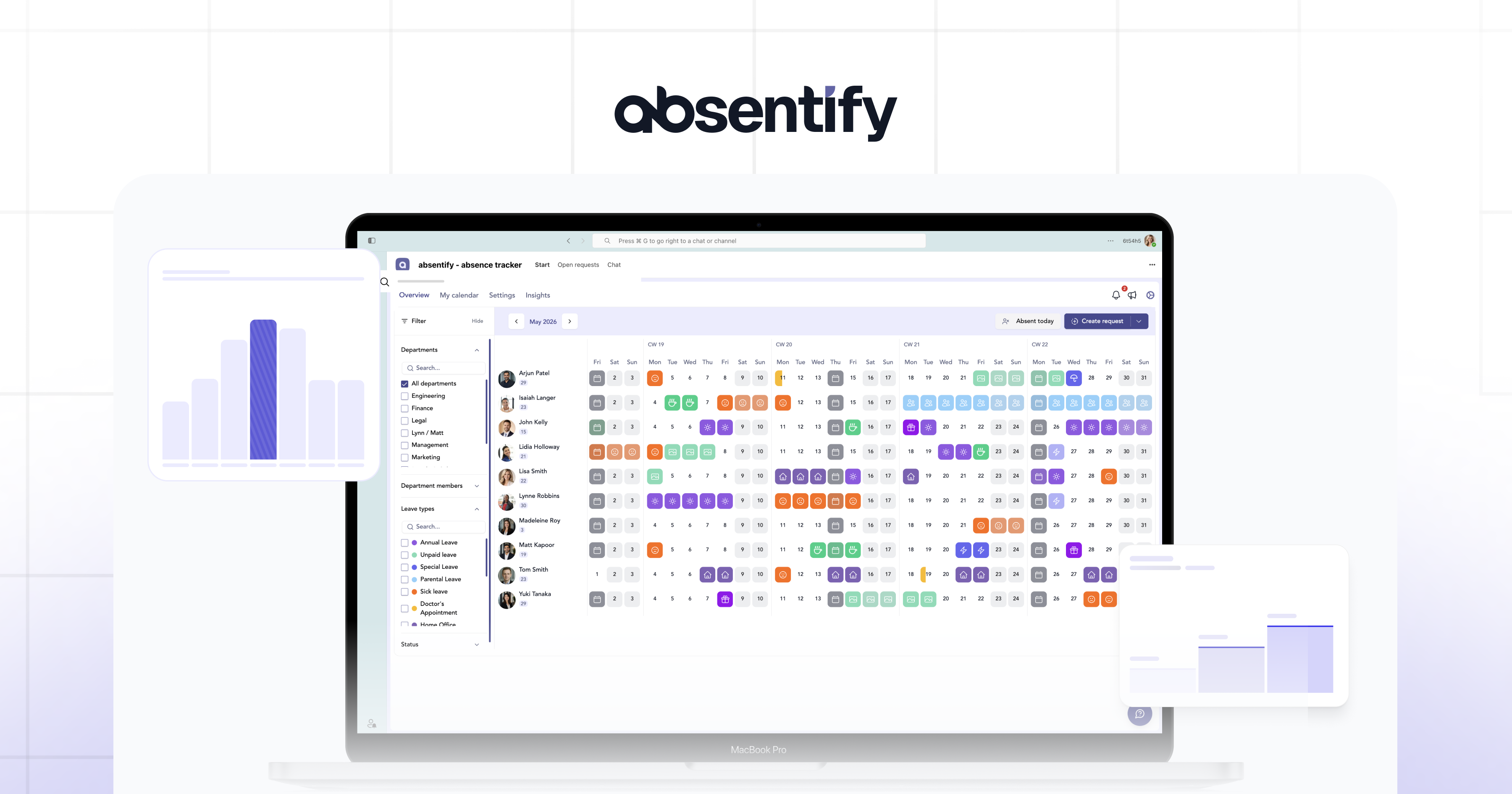
A data-driven absence analysis surfaces patterns that gut feeling would miss: clusters of sick days on Mondays or Fridays, hotspots in individual teams, seasonal peaks and a creeping rise in long-term absences.
Absence-management software delivers this analysis and lets you intervene before pressure becomes chronic.
What Does High Sickness Absence Cost — and What Does Reducing It Deliver?
A single absence day costs an employer somewhere between £200 and £600 depending on industry and role. For a mid-sized company with 50 employees and a 12% absence rate, the direct cost of absence quickly adds up to several hundred thousand pounds a year.
| Item | Annual value (example: 50 FTE) |
|---|---|
| Cost of absence at a 12% rate | several hundred thousand pounds |
| Reduction by 2 percentage points | approx. £100,000 saved |
| Investment in absence management | approx. £4,000 to £15,000 |
A reduction of just two percentage points pays back a professional absence-management programme many times over.

Start for free now
No credit card required—enjoy unlimited access with our free plan. You can upgrade or cancel anytime.
How to Reduce Sickness Absence Sustainably with absentify
absentify calculates the sickness rate and the overall absence rate automatically and detects clustering in individual teams. Automatic alerts to line managers kick in as soon as absences pass the thresholds you have defined.
- Automatic absence rate: You see KPIs like sickness rate and total absence rate, calculated automatically and updated every day.
- Early warning system: You receive automatic alerts as soon as absence in a team exceeds your defined thresholds, so you can act before the team tips into overload.
- Return-to-work foundation: absentify provides the full absence history of an employee as an objective basis for return-to-work conversations and occupational-health reviews.
- Fast rollout: Companies with several hundred employees are productive within a few hours — no IT project, no training waves.
Track and analyse sickness absence directly in Microsoft 365 with absentify
- No credit card required
- Unlimited free access
- Upgrade or cancel anytime
Reduce Sickness Absence – Frequently Asked Questions
About the author

Anna Keller
Content manager at absentify
As a blog author at absentify, Anna Keller explains how companies can efficiently manage absences, vacations, and working hours. In her articles, she combines HR practice with Microsoft 365 tips for Outlook and Teams and provides templates, step-by-step instructions, and software comparisons for modern, digital processes.
Share article
More interesting articles
Reducing overtime: rights, duties and the process for employers and teams
Reducing overtime means offsetting accumulated extra hours with time off or payment. Under German employment law, the six calendar months or 24 weeks specified in the German Working Time Act apply solely to offsetting an extended working day against the statutory eight-hour average. Employment contracts, works agreements or collective agreements determine how an overtime balance can be reduced. Where these rules permit time off in lieu, the employer determines its timing and process within the scope of their right to give instructions.
Anna Keller
Content manager at absentify
When does unused leave expire? Deadlines and exceptions that determine your entitlement
Under German law, unused leave expires only under certain conditions: entitlement generally lapses on 31 December, or after the carryover period on 31 March, only if your employer has given you timely and specific notice of the impending expiry and you still do not take the leave. An exception applies in cases of continuous illness.
Anna Keller
Content manager at absentify
Employee Self Service (ESS): Definition, Features, and Benefits for Leave and Absence Management
Employee Self Service (ESS) gives employees access to manage their personal data, leave requests, or absences themselves without coordinating every step with HR. The term originally comes from SAP HR modules and has become an umbrella term for self-service features in human resources. Its benefits are particularly clear in leave and absence management.
Anna Keller
Content manager at absentify