

Company-wide shutdowns: Definition, legal framework & implementation
A company-wide shutdown is an employer-designated period during which the business closes entirely or partially and employees are required to take leave. It serves to consolidate time off for operational reasons and directly affects individual vacation planning. As a result, clear policies around eligibility, scope, employee consultation, and advance notice are essential.
Company-wide shutdowns: The essentials at a glance
- Definition: An employer-designated period during which employees must take leave because the business or specific departments are closed.
- Eligibility: A company-wide shutdown is only permissible when supported by legitimate business reasons and when employee leave preferences are reasonably considered. In the US, no federal law restricts mandatory shutdowns; in the UK, employers may direct when leave is taken under the Working Time Regulations 1998.
- Employee consultation: Where a works council, union, or employee representative body exists, shutdowns typically require consultation or agreement. Under UK law, employers must give at least twice the notice of the leave period they require.
- Scope: Employers should not consume the entire annual leave entitlement through mandatory shutdowns and must leave employees a reasonable portion for personal use.
- Advance notice: There is no universal statutory notice period, but shutdowns must be announced with sufficient lead time for employees to plan accordingly. SHRM recommends communicating shutdown dates as early as possible, ideally before the start of the leave year.
- Special cases: Illness during a shutdown, pre-approved leave, insufficient leave balances (e.g., for new hires), and terminations each require separate legal consideration.
What is a company-wide shutdown?
A company-wide shutdown is an employer-designated period during which employees are required to take leave because the business or specific departments are fully or partially closed. The leave taken during this period is deducted from the employee's existing annual leave entitlement.
A shutdown can apply to the entire organization or only to certain departments, locations, or business units. The key factor is that work cannot or should not be performed during this period for operational reasons.

When can an employer mandate a company-wide shutdown?
The ability to mandate shutdowns varies by jurisdiction. In the United States, there is no federal statute restricting an employer's right to schedule mandatory closures, though employment contracts and collective bargaining agreements may impose limitations. In the United Kingdom, employers can require employees to take leave on specific dates under the Working Time Regulations 1998, provided proper notice is given.
What legal requirements apply to company-wide shutdowns?
A company-wide shutdown is generally permissible when:
- the employer determines the timing of leave,
- employee leave preferences are taken into account,
- the decision is supported by legitimate business reasons,
- the process is applied fairly and consistently.
What business reasons justify a company-wide shutdown?
Commonly accepted business reasons include:
- A full or near-complete business closure.
- Seasonal plant shutdowns or recurring downtime periods.
- Seasonal interruptions of business operations.
- Operational workflows where meaningful work cannot be performed.
- Dependencies on suppliers, clients, or key personnel.
A general decline in workload or orders alone is typically insufficient to justify a mandatory shutdown.
What employee interests must be considered during a company-wide shutdown?
When scheduling a shutdown, the following employee interests should be factored in:
- pre-approved leave,
- family commitments,
- planned travel,
- social considerations such as school holidays or caregiving responsibilities.
Completely overriding employee preferences without consideration is not acceptable practice and, in many jurisdictions, may expose the employer to legal risk.
What applies when there is no works council or employee representative?
Even without formal employee representation, employers cannot mandate shutdowns arbitrarily. They remain bound by applicable employment law and contractual obligations, and must ensure a fair and transparent balancing of business needs and employee interests. According to SHRM, clear written policies and advance communication are critical to avoiding disputes.
When must a company-wide shutdown be announced?
While there is no single universal notice requirement, best practice — and in many jurisdictions a legal requirement — is to provide adequate advance notice. Under UK Working Time Regulations, employers must give notice of at least twice the length of the shutdown period. In the US, SHRM recommends communicating shutdown dates as early as possible.
In practice, shutdowns are often announced several months in advance. For longer closure periods, notification ideally occurs before the start of the leave year.

Start for free now
No credit card required—enjoy unlimited access with our free plan. You can upgrade or cancel anytime.
What special cases should be considered during a company-wide shutdown?
Company-wide shutdowns raise specific issues around illness during the shutdown, pre-approved leave, insufficient leave balances, new hires and probationary employees, terminations, and part-time workers. In each of these situations, special rules may apply that differ from standard leave administration.
What happens if an employee falls ill during a company-wide shutdown?
If an employee becomes ill during a shutdown and provides appropriate medical documentation, the sick days are generally not counted against their annual leave. In the UK, this is established under case law and the Working Time Regulations. In the US, company policy and state laws determine whether sick time and vacation are treated separately.
What happens with pre-approved leave during a shutdown?
Pre-approved leave generally remains valid. An employer should not unilaterally revoke approved leave simply because a shutdown is later scheduled. Changes should only be considered in exceptional circumstances and with appropriate notice.
What happens if an employee's leave balance is insufficient for the shutdown?
If an employee does not have enough accrued leave — for example, new hires or employees late in the year — the employer typically cannot force unpaid leave unilaterally. Where the business closes despite an employee's insufficient balance, the employer bears the risk. According to the Bureau of Labor Statistics (BLS), around 34% of US private industry workers have access to fewer than 10 days of paid leave in their first year, making this a common concern.
What applies to new hires or probationary employees during a shutdown?
In many jurisdictions, the full annual leave entitlement does not accrue until after a qualifying period. Before that, only a prorated entitlement exists. A shutdown is still possible during this phase but requires careful planning to avoid placing new employees at a disadvantage.
What applies when an employee is terminated during or before a shutdown?
Even upon termination, the existing leave entitlement is preserved. Leave days that cannot be taken due to the shutdown must be granted during the notice period or compensated financially through a payment in lieu of leave.
Does a company-wide shutdown apply to part-time employees?
A company-wide shutdown generally applies to part-time employees as well. Leave days are deducted in proportion to the individual's working schedule. Any disadvantage to part-time employees compared to full-time staff is not permissible.
How does a company-wide shutdown differ from similar arrangements?
Company-wide shutdown vs. leave blackout: A shutdown requires employees to take leave. A leave blackout prohibits employees from taking leave during a specific period. While a shutdown serves to close the business, a blackout aims to maintain full staffing levels.
Company-wide shutdown vs. garden leave: A shutdown is regular annual leave deducted from the employee's entitlement. Garden leave means releasing an employee from the obligation to work without deducting leave. Unilateral unpaid leave is generally not permissible under employment law.
Company-wide shutdown vs. short-time working: A shutdown draws on existing leave entitlements. Short-time working temporarily reduces working hours for economic reasons and follows its own regulatory framework. The two instruments are legally distinct.
Company-wide shutdown vs. customary days off: Christmas Eve and New Year's Eve are not public holidays in most jurisdictions. Whether these days are non-working depends on collective agreements, company policies, or individual contracts. Otherwise, they are regular working days or must be covered by annual leave.
Conclusion: Plan company-wide shutdowns with clarity and compliance
A company-wide shutdown is a legitimate but legally sensitive tool. Employers must demonstrate valid business reasons, consider employee interests, respect consultation requirements, and provide timely notice. Errors in planning, communication, or documentation can quickly lead to disputes, invalid shutdowns, or compensation claims.
Transparent, early, and well-documented planning is therefore essential — particularly for special cases, partial shutdowns, or recurring closure periods.
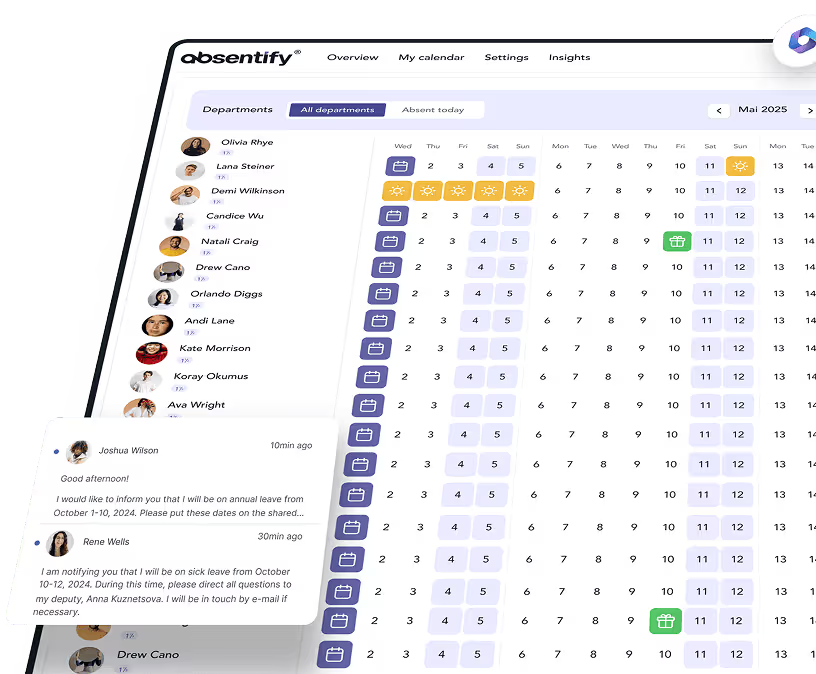
With absentify, you can plan and manage company-wide shutdowns in a structured, traceable, and visible way for everyone involved. Leave entitlements, special cases, and absences remain transparent at all times — without spreadsheets or miscommunication. This creates planning certainty, prevents conflicts, and helps you implement policies efficiently.
Your benefits with absentify:
- Centralized shutdown planning for teams, locations, or departments
- Transparent leave balance overviews for all stakeholders
- Clear documentation and traceability for HR, managers, and employees
- Smooth communication through clear absence calendars
Would you like to simplify your company-wide shutdowns?
- No credit card required
- Unlimited free access
- Upgrade or cancel anytime
Company-wide shutdowns – Frequently asked questions and answers
About the author

Anna Keller
Content manager at absentify
As a blog author at absentify, Anna Keller explains how companies can efficiently manage absences, vacations, and working hours. In her articles, she combines HR practice with Microsoft 365 tips for Outlook and Teams and provides templates, step-by-step instructions, and software comparisons for modern, digital processes.
Share article
More interesting articles
Reducing overtime: rights, duties and the process for employers and teams
Reducing overtime means offsetting accumulated extra hours with time off or payment. Under German employment law, the six calendar months or 24 weeks specified in the German Working Time Act apply solely to offsetting an extended working day against the statutory eight-hour average. Employment contracts, works agreements or collective agreements determine how an overtime balance can be reduced. Where these rules permit time off in lieu, the employer determines its timing and process within the scope of their right to give instructions.
Anna Keller
Content manager at absentify
When does unused leave expire? Deadlines and exceptions that determine your entitlement
Under German law, unused leave expires only under certain conditions: entitlement generally lapses on 31 December, or after the carryover period on 31 March, only if your employer has given you timely and specific notice of the impending expiry and you still do not take the leave. An exception applies in cases of continuous illness.
Anna Keller
Content manager at absentify
Employee Self Service (ESS): Definition, Features, and Benefits for Leave and Absence Management
Employee Self Service (ESS) gives employees access to manage their personal data, leave requests, or absences themselves without coordinating every step with HR. The term originally comes from SAP HR modules and has become an umbrella term for self-service features in human resources. Its benefits are particularly clear in leave and absence management.
Anna Keller
Content manager at absentify