

Calculate sickness rate: Guide for HR and managers
In your company, the number of sick days is increasing and you are looking for a reliable method to accurately determine the proportion? This article will show you the procedure for calculating the sickness rate, which values serve as a guide, and how you can automatically obtain figures with the right tools and instruments.
Sickness rate – The essentials explained in 60 seconds:
-
Calculate the sickness rate reliably: The formula (sick days ÷ target working days) × 100 allows for a transparent determination of the proportion of sickness-related downtime in the company.
-
Benchmarks & Comparative Values: A sickness rate of 5–6% is considered the national average, values above 6% indicate a need for action. Important: Part-time, turnover, and long-term sick must be correctly accounted for.
-
Understand the causes & take targeted countermeasures: Common triggers for high sickness rates include psychological stress, poor ergonomics, and risk of infection. Measures such as flexible working hours, health services, or ergonomic adjustments have a preventive effect.
-
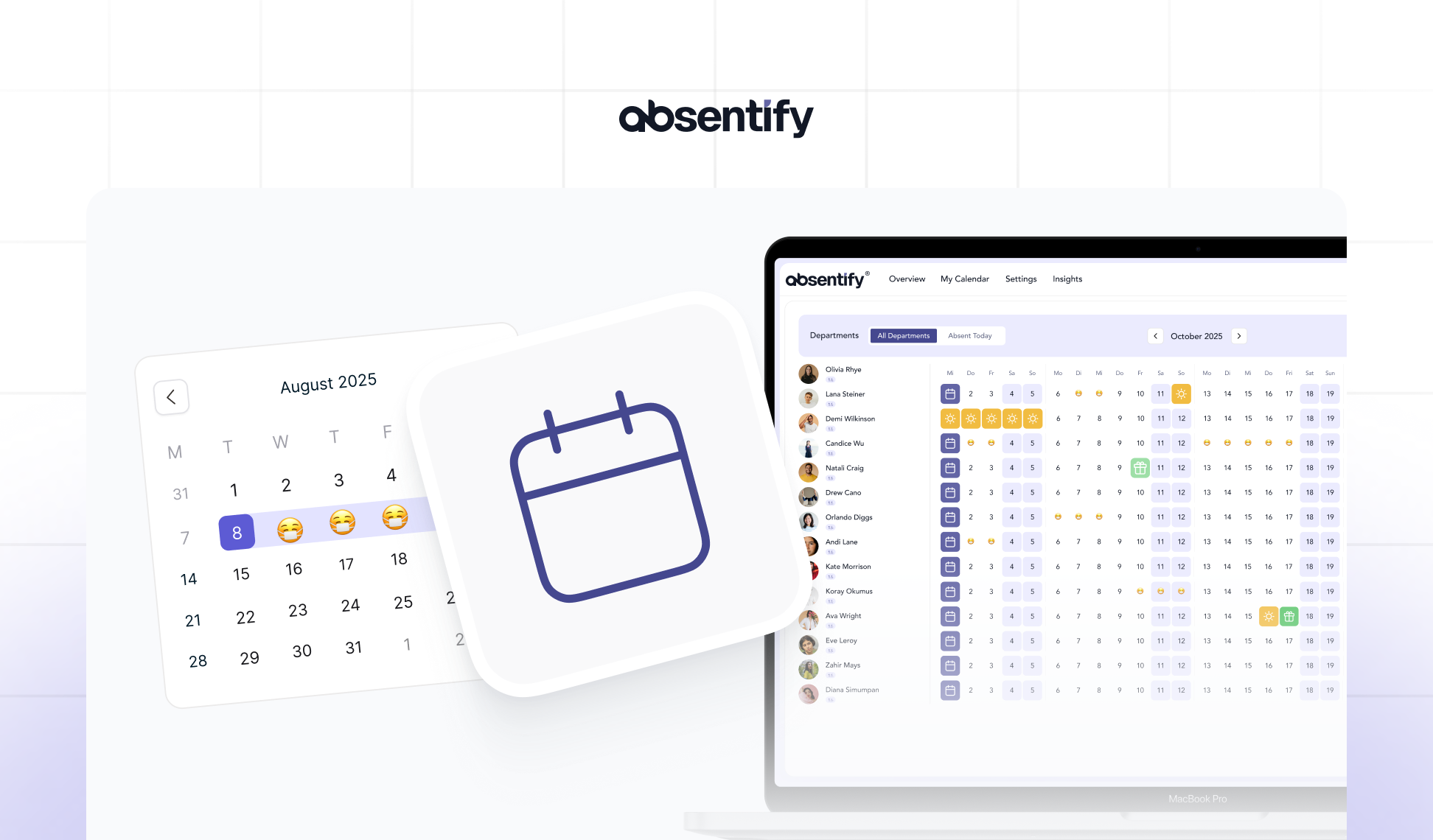
Digital absence management with absentify: The tool enables automatic recording and analysis of sick notes, provides real-time dashboards and early warning systems for executives.
Calculate sickness rate – Definition and demarcation
The sickness rate indicates in percentage terms how many workdays employees are absent during the selected period due to illness. This includes only medically certified absences, in order to clearly represent the health status of the team.
Unlike the absenteeism rate, which includes all absences such as vacation or training, the sickness rate focuses exclusively on absences due to illness. As a result, it is suitable for specifically determining the health-related costs and loss of resources.
How is the sickness rate calculated?
To calculate the sickness rate, the total number of days absent due to illness as well as the total number of scheduled workdays are needed.
The formula for calculating the sickness rate is:
Sickness rate (%) = (Total number of days absent due to illness ÷ Total number of scheduled workdays) × 100
Suppose that in a quarter, your team has 40 certified sick days, and the contractual working days for all employees amount to 800, this results in a sickness rate of 5% (40 ÷ 800 × 100). This percentage indicates that, in theory, 5% of the paid working time in the mentioned period was lost due to illness.

Required Data and Recording: Sick Days per Employee
For the sickness rate you need two numbers:
-
Total number of accumulated sick days
-
Total number of required workdays
You can capture this by the following procedure:
-
Counting days of illness: Each medically certified day of absence (full day = 1, half day = 0.5) is included in the total count.
-
Determine target working days: Add up the contractually agreed working days of all employees and subtract vacation and public holidays.
-
Note on special cases: Part-time employees and fluctuating staff numbers are taken into account proportionally.
Special cases in the calculation of the sickness rate
In practice, exceptional situations often occur that you must handle separately to ensure the rate is not skewed:
-
Record part-time employees on a pro-rata basis: Count the contractually agreed working days of the part-time employee (e.g., 2 days/week) and multiply them by the number of weeks in the period.
-
Compensate for employee turnover: Calculate the target working days based on the average number of employees during the period (full-time equivalents) or track the sickness rate monthly/quarterly separately and then form the average.
-
Long-term sick individuals take note: Decide whether the days of absence after the end of the 42 days of continued pay should still be included in the sickness statistics or be excluded.
-
Exclude operational failures: Technical malfunctions, strikes, or company holidays are not sick days. Deduct such days from the target working days so they do not distort the sickness rate.
What is a normal sickness rate?
As a rough guideline, the average sickness rate in Germany is about 5 to 6%. Values below 3% are considered low, between 3 and 5% as average, and above 5% as high.
-
National average: Approximately 5 to 6%
-
Industry differences: Healthcare and logistics often above 6%, IT/Banking around 3 to 4%.

Start for free now
No credit card required—enjoy unlimited access with our free plan. You can upgrade or cancel anytime.
Reasons for a high rate of sickness
An above-average sickness rate directly affects productivity, costs, and team dynamics. The main causes are:
-
Poor working conditions: Inadequate ergonomics and insufficient ventilation contribute to back problems and respiratory infections, leading to increased absenteeism.
-
Excessive Strain: Persistent time pressure and frequent overtime lead to exhaustion, which weakens the immune system and increases absenteeism.
-
Infection risks: Communal spaces without adequate hygiene measures facilitate the spread of colds and flu, resulting in multiple employees being absent at the same time.
-
Mental Strain: Constant availability without clear recovery phases promotes burnout symptoms and thus leads to more sick leave.
Impacts of a high sickness rate
An above-average rate of sickness absence directly affects productivity, costs, and team dynamics. Among the most drastic consequences are:
-
Productivity loss: Each day of absence due to illness reduces the available working hours, which delays projects and jeopardizes deadlines.
-
Increased personnel costs: Continued payment of wages in case of sickness, use of substitutes or external service providers drive up personnel expenses.
-
Burden on the remaining team: Frequent absences distribute additional tasks to healthy employees, leading to stress, low motivation, and further absences.
-
Planning uncertainty: Unpredictable absences complicate deployment and capacity planning for executives.
Measures against a high rate of sickness
A high rate of sickness requires targeted steps, to reduce absenteeism and improve employee health:
-
Improve the workplace: Ensure break regulations and check the ventilation. Ergonomic furniture and regular maintenance reduce health risks.
-
Health promotion offers: Provide occupational health examinations and vaccination campaigns. Organize workshops on back exercises or stress reduction to decrease absenteeism.
-
Introduce flexible working hours: Allow flextime or remote work to reduce the risk of infection during flu season and to create periods of rest.
-
Promote communication: Establish clear reporting channels for sick leave notifications. Regular discussions between managers and employees reveal sources of stress.
-
Employee wellness programs: Initiate activity days such as 'Exercise Breaks' or walking groups. Shared activities strengthen team cohesion and reduce symptoms of stress.
-
Early detection through absence management: Use tools like absentify to monitor absences in real-time. If the rate increases in a team, you can take targeted action in time.
Record absences online, with absentify as a practical tool
A digitally supported system helps to record sick days immediately and completely, without the need for manual table maintenance. absentify takes care of the data collection, calculation, and analysis, so you can access confidential and up-to-date figures at any time:
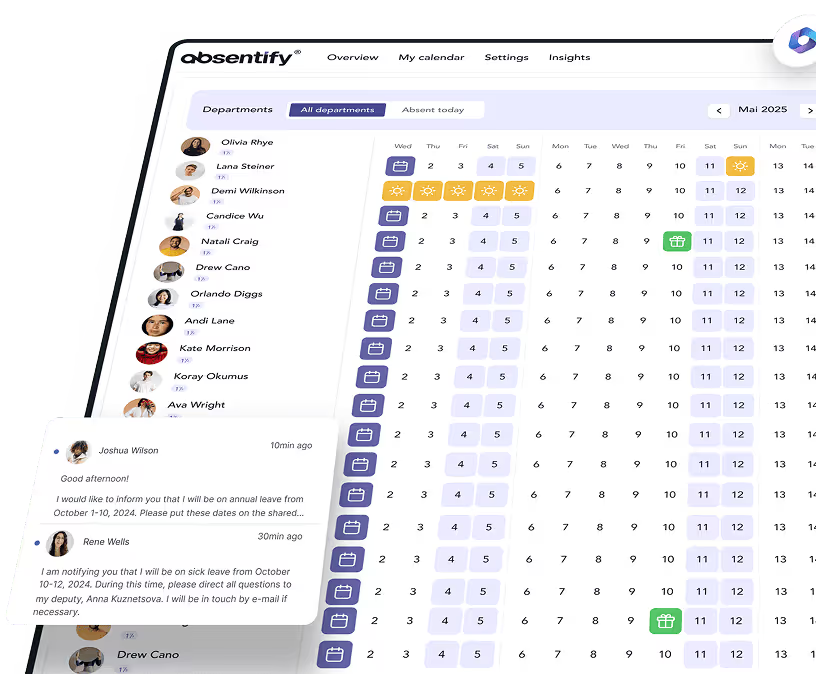
Automatic sick leave notification via Teams or Outlook
Employees enter their sick leave directly into Microsoft Teams or Outlook. absentify records each reported day immediately, so no days of absence are lost.
A database instead of Excel spreadsheets
Absent employees and their downtime data are contained within a single system. Double bookings and outdated versions are a thing of the past.
Real-time calculation of the sickness rate
Absentify automatically consolidates all recorded sick days and required workdays. You can immediately see the current sickness rate, without manual entries or formula adjustments.
Unique evaluations and dashboards
With predefined reports, you get average sick days per employee, distribution by departments, and trends over any period of time. You can create your own charts as needed using the Power-BI-Connector.
Early detection and notifications
If the proportion of illness-related absences in a team exceeds a defined limit, absentify automatically sends a warning to the management. This allows you to intervene in a timely manner.
Would you like to simplify your absence management?
- No credit card required
- Unlimited free access
- Upgrade or cancel anytime
Calculate sickness rate – Frequently Asked Questions and Answers
About the author

Anna Keller
Content manager at absentify
As a blog author at absentify, Anna Keller explains how companies can efficiently manage absences, vacations, and working hours. In her articles, she combines HR practice with Microsoft 365 tips for Outlook and Teams and provides templates, step-by-step instructions, and software comparisons for modern, digital processes.
Share article
More interesting articles
Reducing overtime: rights, duties and the process for employers and teams
Reducing overtime means offsetting accumulated extra hours with time off or payment. Under German employment law, the six calendar months or 24 weeks specified in the German Working Time Act apply solely to offsetting an extended working day against the statutory eight-hour average. Employment contracts, works agreements or collective agreements determine how an overtime balance can be reduced. Where these rules permit time off in lieu, the employer determines its timing and process within the scope of their right to give instructions.
Anna Keller
Content manager at absentify
When does unused leave expire? Deadlines and exceptions that determine your entitlement
Under German law, unused leave expires only under certain conditions: entitlement generally lapses on 31 December, or after the carryover period on 31 March, only if your employer has given you timely and specific notice of the impending expiry and you still do not take the leave. An exception applies in cases of continuous illness.
Anna Keller
Content manager at absentify
Employee Self Service (ESS): Definition, Features, and Benefits for Leave and Absence Management
Employee Self Service (ESS) gives employees access to manage their personal data, leave requests, or absences themselves without coordinating every step with HR. The term originally comes from SAP HR modules and has become an umbrella term for self-service features in human resources. Its benefits are particularly clear in leave and absence management.
Anna Keller
Content manager at absentify