

MS Teams Time Tracking: How Time Recording Works
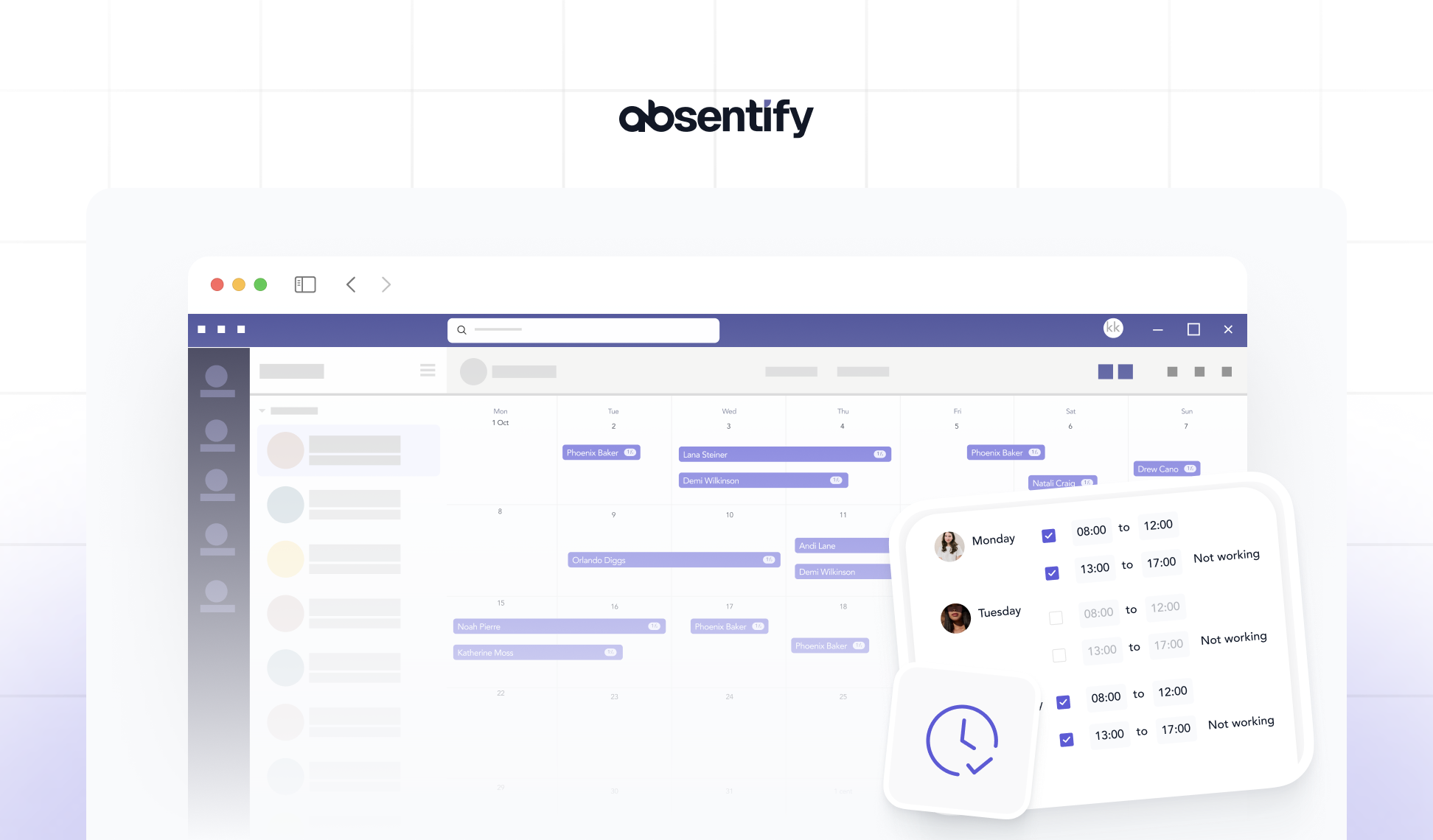
Microsoft Teams introduces its own time tracking with the integrated Shifts app. This allows employees to clock in and out, record breaks, and adjust hours retroactively. For many businesses, this is sufficient, but as shift models become more complex or detailed evaluations are needed, the app quickly reaches its limits.
Team Time Tracking: The Essentials in Brief
-
Microsoft Teams has a native time tracking feature with the integrated Shifts app, which allows for work time blocks and shift scheduling.
-
The Shifts app for time tracking can be added via the App Store in Teams and used directly in the workspace.
-
The Shifts app in MS Teams reaches its limits with pure time recording, detailed evaluations, and simple management in companies without shift work.
-
absentify expands MS Teams with approval processes, real-time updates, and direct management of leave and sickness notifications, enabling complete capacity management.
How does time tracking work in Microsoft Teams?
Microsoft Teams provides an integrated time tracking with the Shifts app. It allows for the management of working hours, breaks, and absences as work blocks or in the form of complex shift schedules for multiple employees.

How do I use time tracking in Microsoft Teams?
Time tracking in MS Teams can be set up directly via the Shifts app and applied. This allows working hours, breaks, and absences to be documented and shift schedules to be created.
Step 1: Make the layer app accessible
-
Desktop & Web: Open Teams and select “Shifts” in the left sidebar. If the app is not visible, add it via “More Apps”.
-
Mobile devices: Tap 'Layers' in the app bar or swipe up and pin if the icon is missing to keep it visible permanently.

Step 2: Create a schedule (for managers)
-
Select team and create new schedule.
-
Confirm time zone, add groups or employees.
-
Create shifts with start time, end time, breaks, and optional notes or colors.

- Set up shifts with date, start and end times, as well as breaks. Optionally, colors, notes, or shift activities can be added.
Step 3: Structure and reuse the schedule
-
Already created shifts can be copied and transferred to additional weeks.
-
Open shifts can be added so that employees can take them on themselves.
Step 4: Mobile Layer Management
-
Employees can view their own shifts as well as the entire team schedule.
-
Shifts can be taken over, swapped, or offered.
-
The mobile app also allows for clocking in and out of work times and breaks.
Microsoft Teams Time Tracking: Options and Limitations
The Microsoft Teams time tracking through the Shifts app offers many options to document working hours and organize shift schedules digitally. At the same time, the tool has its limitations in certain scenarios.

Options for time tracking with shifts in MS Teams
-
Time Tracking: Start of work, breaks, and end of work can be recorded directly.
-
Shift scheduling: Managers can create, publish, and adjust complete work schedules.
-
**Self-organization: **Employees can swap shifts, request absences, or take over open shifts.
-
Mobile & Desktop: The usage is possible both on PC and via app, which is convenient for employees who are often on the move.
-
Integration: Schedules can be exported to Excel or imported from Excel.
Limits of Team Time Tracking
-
Focus on shift work: Shifts are primarily designed for frontline workers (e.g., production, service), less so for traditional office hours.
-
Simple blocks of working hours: Those who only need precise time tracking without shift planning quickly reach limits.
-
Usability: For some teams, the amount of features is complex, especially without clear onboarding.
-
Advanced Analytics: Detailed reports or unique compliance features are only available to a limited extent.
-
License requirements: The availability of the Layers app may vary depending on the Microsoft 365 licensing model.

Start for free now
No credit card required—enjoy unlimited access with our free plan. You can upgrade or cancel anytime.
Tips for using time tracking in teams
Time tracking in Microsoft Teams using the Shifts app can be utilized in various ways. With a few tricks, the workday becomes significantly more organized:
1. Make the app visible to everyone
To ensure that no one overlooks the time tracking, the app should be pinned to the Teams bar. This way, it is accessible at all times, both on the desktop and on the smartphone.
2. Use colors
Colors can be used to clearly separate layers or work blocks from each other. For example, early shifts can be marked in blue and late shifts in green. This provides quick orientation in the calendar.
3. Copy recurring processes
Instead of creating new plans every week, existing ones can be copied. This saves time and simplifies management when workflows are consistent.
4. Provide open shifts
Not all shifts need to be assigned immediately. Open shifts allow employees to choose which assignments they want to take on.
5. Enable reminders
Reminders are particularly useful for mobile use. Employees are automatically notified when their work time starts or when it's time for a break.
6. Export Reports
For payroll or project accounting, working hours can be exported directly to Excel. This provides clear lists with all relevant data.
absentify: Why the tool optimizes time tracking in teams
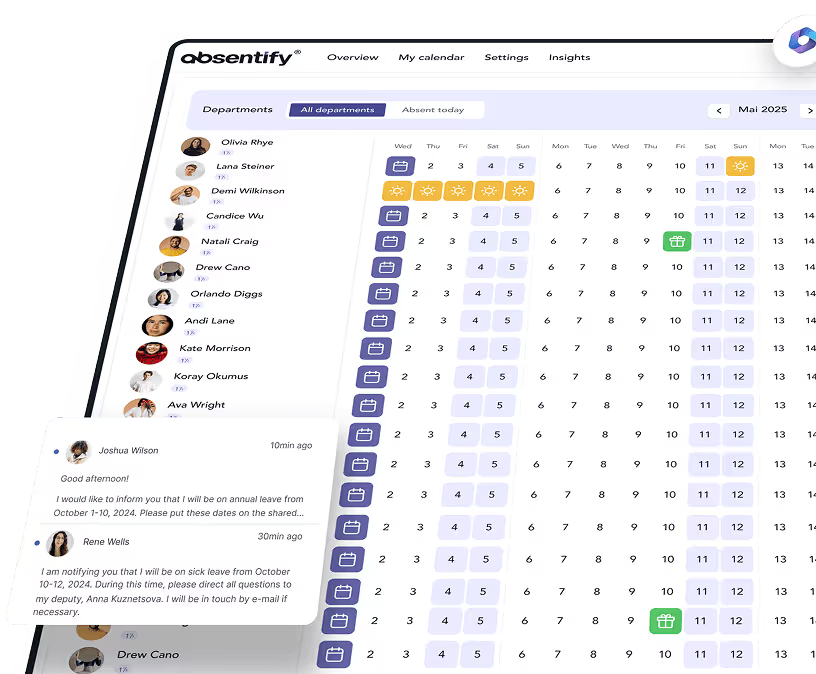
absentify enhances time tracking in Microsoft Teams with features that are missing by default. This allows leave and sickness notifications to be managed directly in Teams. Additionally, approval workflows can be set up and evaluations can be retrieved without having to switch programs.
The **integration of time tracking, shift planning, and **absence management creates a clear overview:
-
Who is available during which period?
-
Which tasks require a timely handover?
-
Which shifts are still open?
-
Where is overload becoming apparent?
This keeps the entire capacity planning in one place centralized.
Would you like to simplify your absence management?
- No credit card required
- Unlimited free access
- Upgrade or cancel anytime
MS Teams Time Tracking – Frequently Asked Questions and Answers
About the author

Anna Keller
Content manager at absentify
As a blog author at absentify, Anna Keller explains how companies can efficiently manage absences, vacations, and working hours. In her articles, she combines HR practice with Microsoft 365 tips for Outlook and Teams and provides templates, step-by-step instructions, and software comparisons for modern, digital processes.
Share article
More interesting articles
Reducing overtime: rights, duties and the process for employers and teams
Reducing overtime means offsetting accumulated extra hours with time off or payment. Under German employment law, the six calendar months or 24 weeks specified in the German Working Time Act apply solely to offsetting an extended working day against the statutory eight-hour average. Employment contracts, works agreements or collective agreements determine how an overtime balance can be reduced. Where these rules permit time off in lieu, the employer determines its timing and process within the scope of their right to give instructions.
Anna Keller
Content manager at absentify
When does unused leave expire? Deadlines and exceptions that determine your entitlement
Under German law, unused leave expires only under certain conditions: entitlement generally lapses on 31 December, or after the carryover period on 31 March, only if your employer has given you timely and specific notice of the impending expiry and you still do not take the leave. An exception applies in cases of continuous illness.
Anna Keller
Content manager at absentify
Employee Self Service (ESS): Definition, Features, and Benefits for Leave and Absence Management
Employee Self Service (ESS) gives employees access to manage their personal data, leave requests, or absences themselves without coordinating every step with HR. The term originally comes from SAP HR modules and has become an umbrella term for self-service features in human resources. Its benefits are particularly clear in leave and absence management.
Anna Keller
Content manager at absentify